The short version
First editions are supposed to have rough edges. The Nelson Mandela Marathon arrived looking remarkably polished: straightforward registration, an excellent start setup, well-positioned hydration tables and a finish area that let tired runners keep moving without needing one last display of agility.
The one obvious wobble came early, when marathon runners and 10 km participants shared a short stretch of road. It was busy enough to break the rhythm of runners trying to settle into marathon pace. More on that below, because this is a review—not a press release—but it should not overshadow how much the organisers got right.
An excellent first impression, a genuinely strong start and finish operation, and one short section of course management that deserves another look.
A marathon that was not about my PB
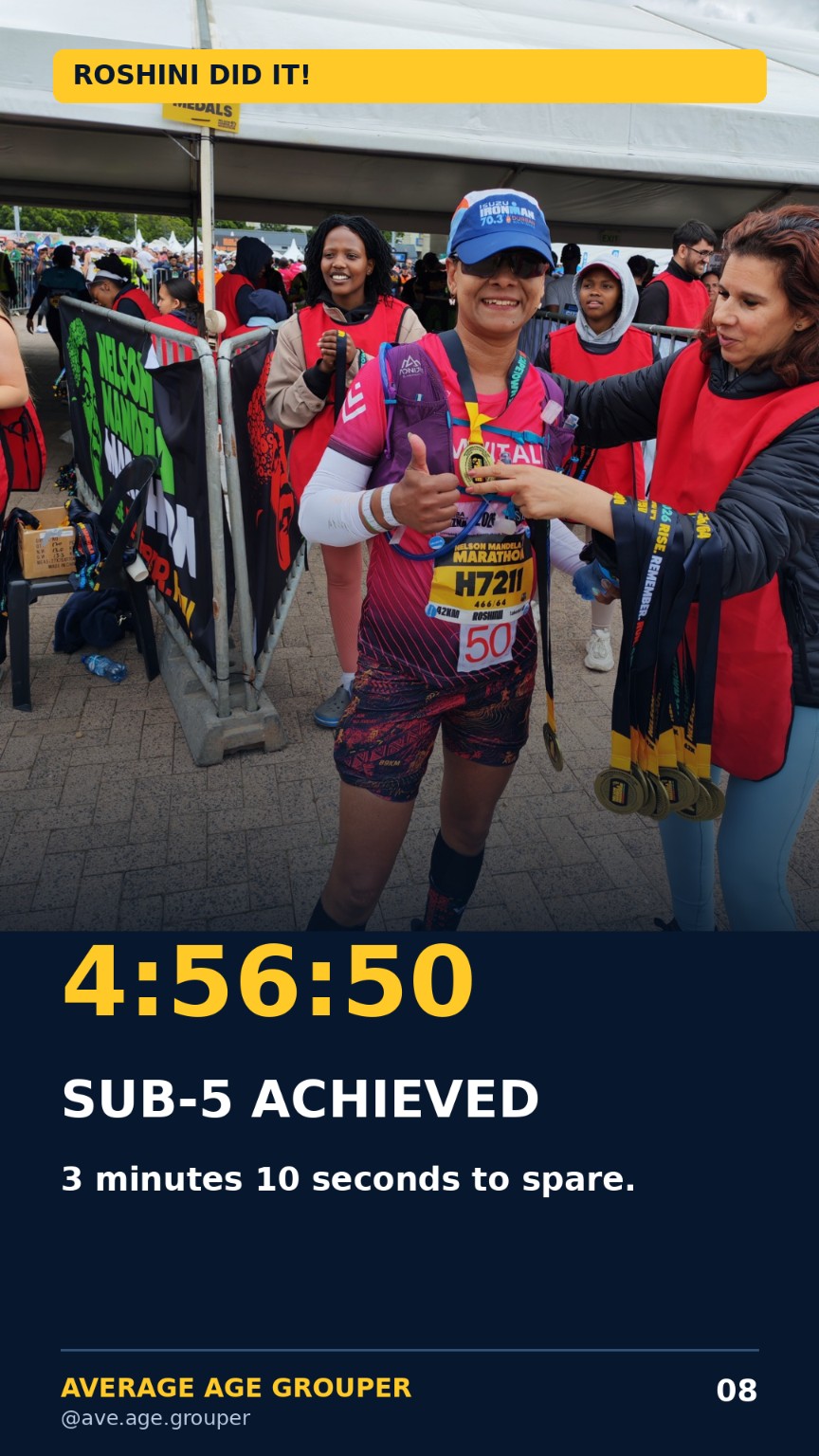
This race came with a very specific job description. Roshini was chasing a sub-five-hour marathon, an important qualifying opportunity for Two Oceans and Comrades, and I was there to help her give it the best possible shot.
We built the pacing plan around approximately 4:54:30. That gave us a small buffer without turning the opening kilometres into the sort of heroic decision that tends to become a terrible idea somewhere after 30 km. We also planned our nutrition and hydration together. My own finish time and personal-best ambitions could wait; this one was about staying controlled, making good decisions and supporting her goal.
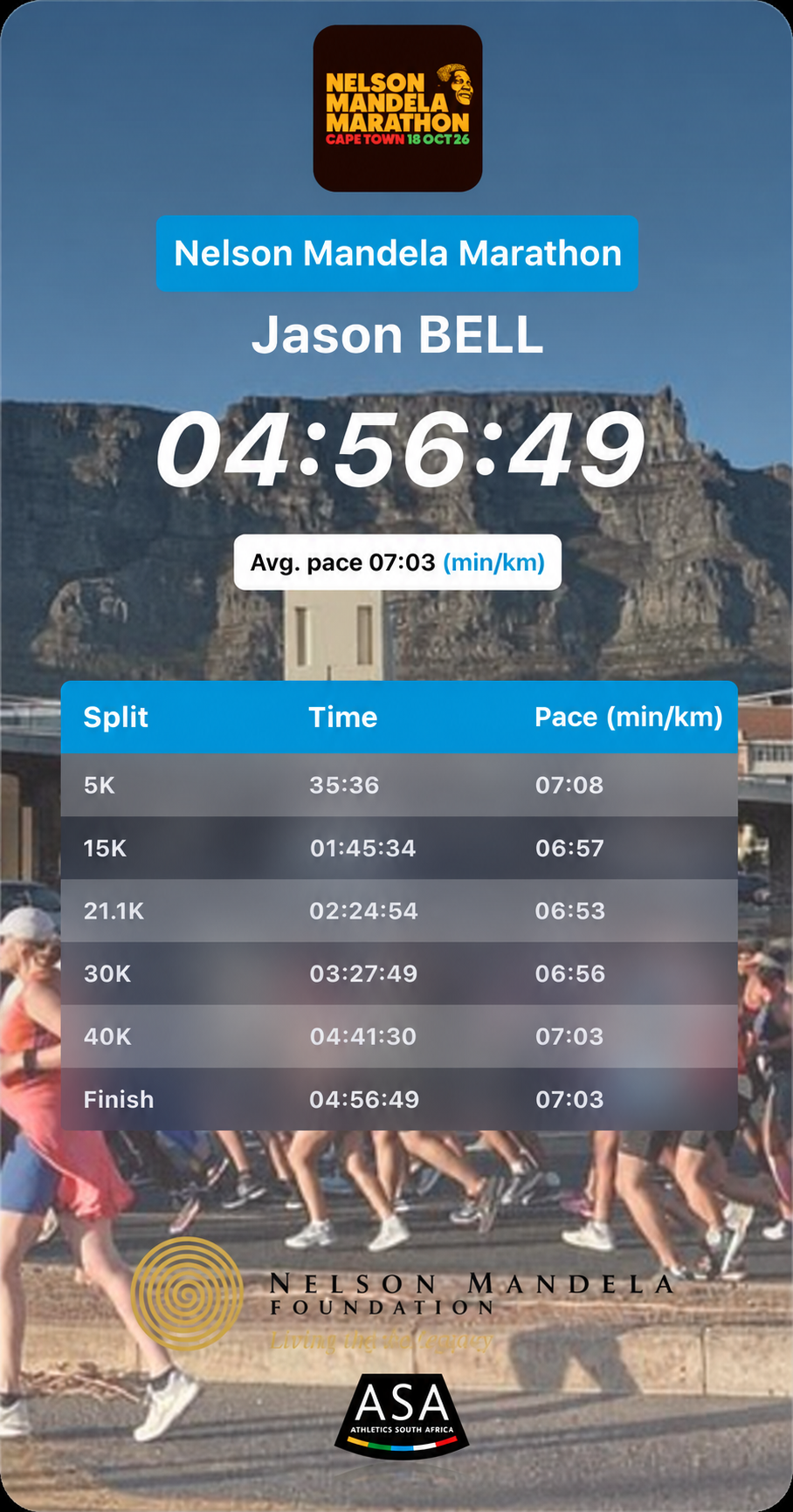
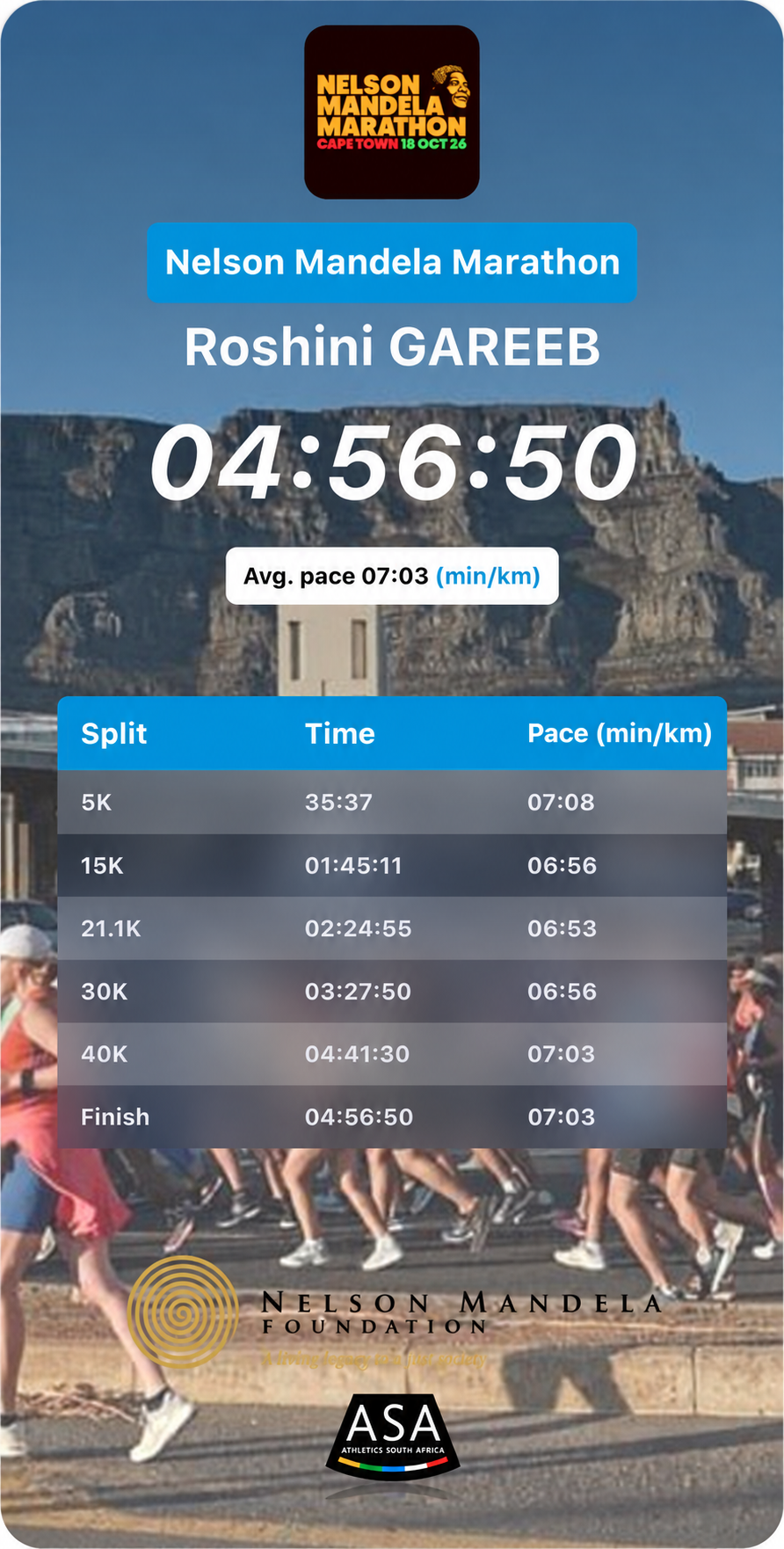
We did not hit the buffer time exactly, but we achieved the part that mattered. I finished in 4:56:49 and Roshini crossed one second later in 4:56:50. That put her safely under five hours—with 3 minutes and 10 seconds to spare—and secured the qualifying time we had come for.
There are days when the stopwatch is about chasing your own number, and days when it is about helping somebody else reach theirs. This was very definitely the second kind.
The band, the watches and the extra distance
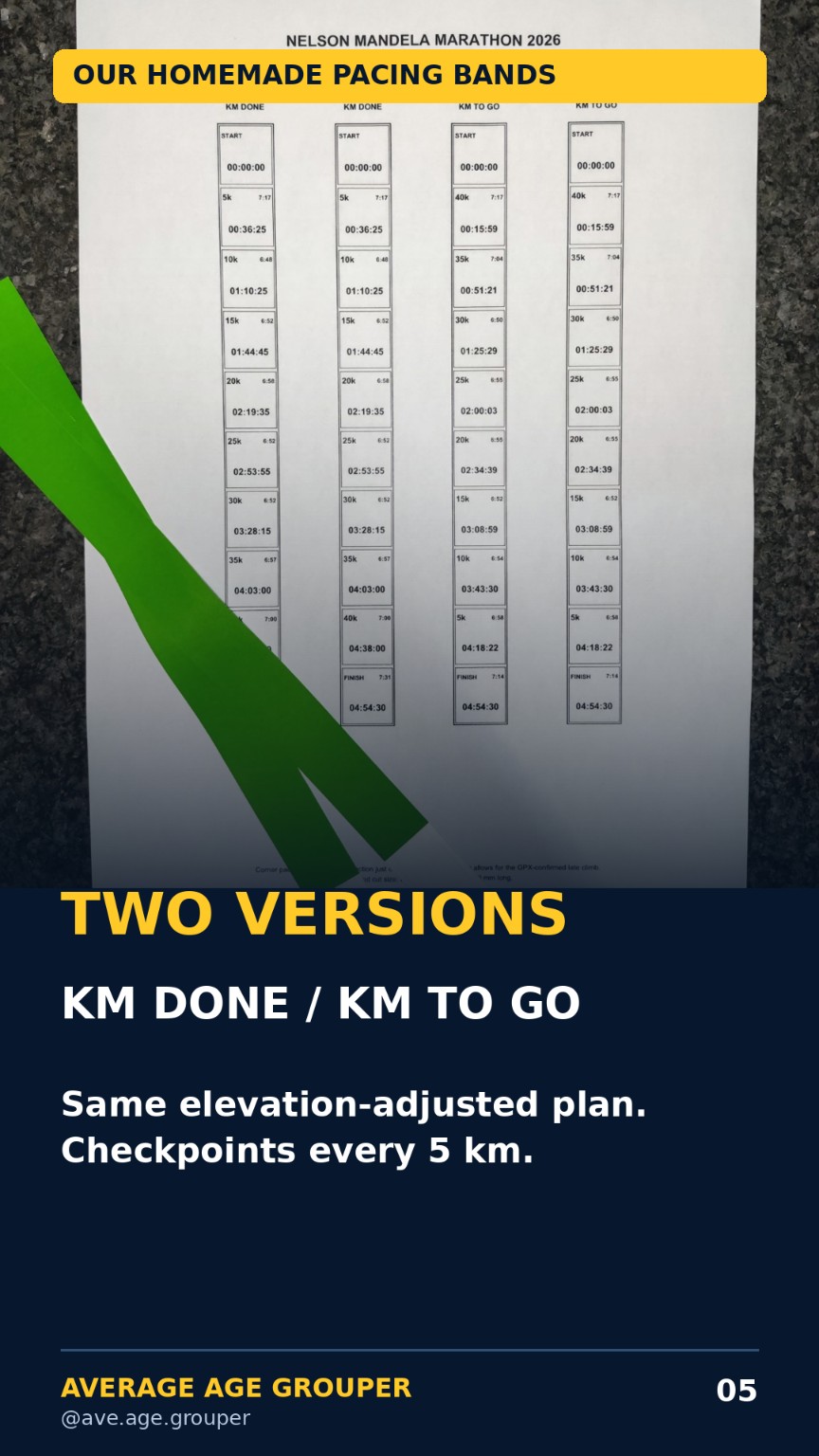
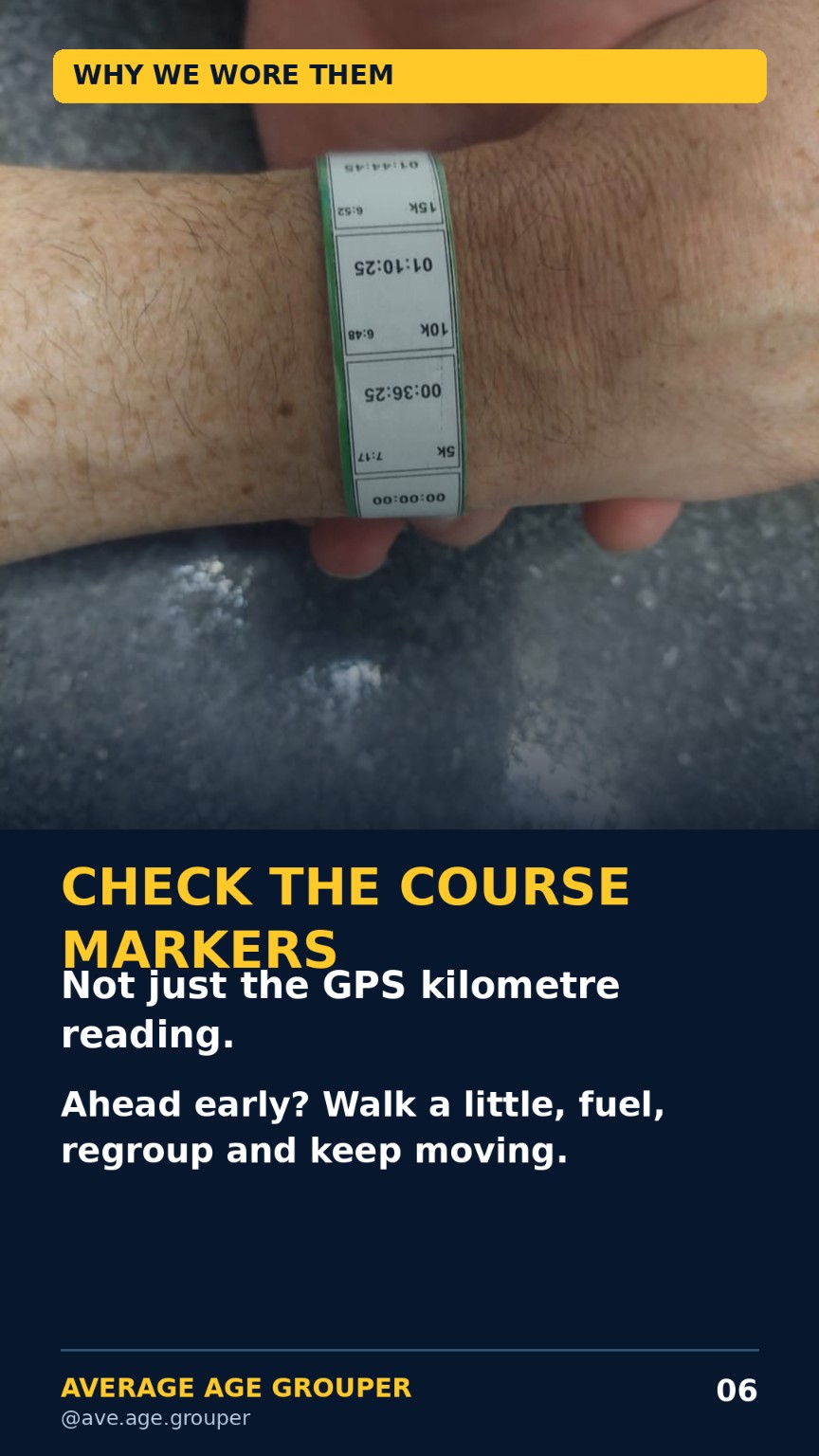
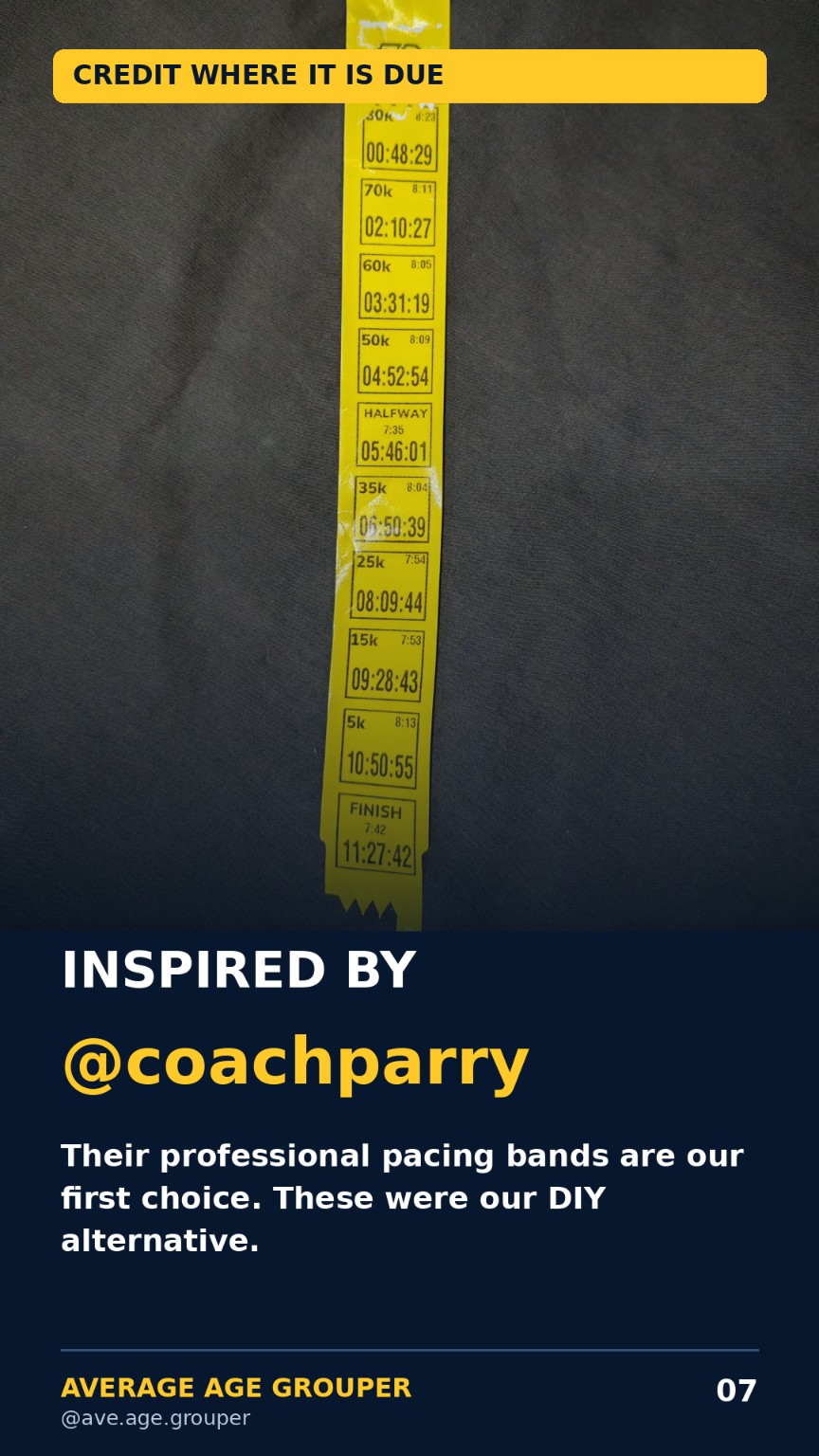
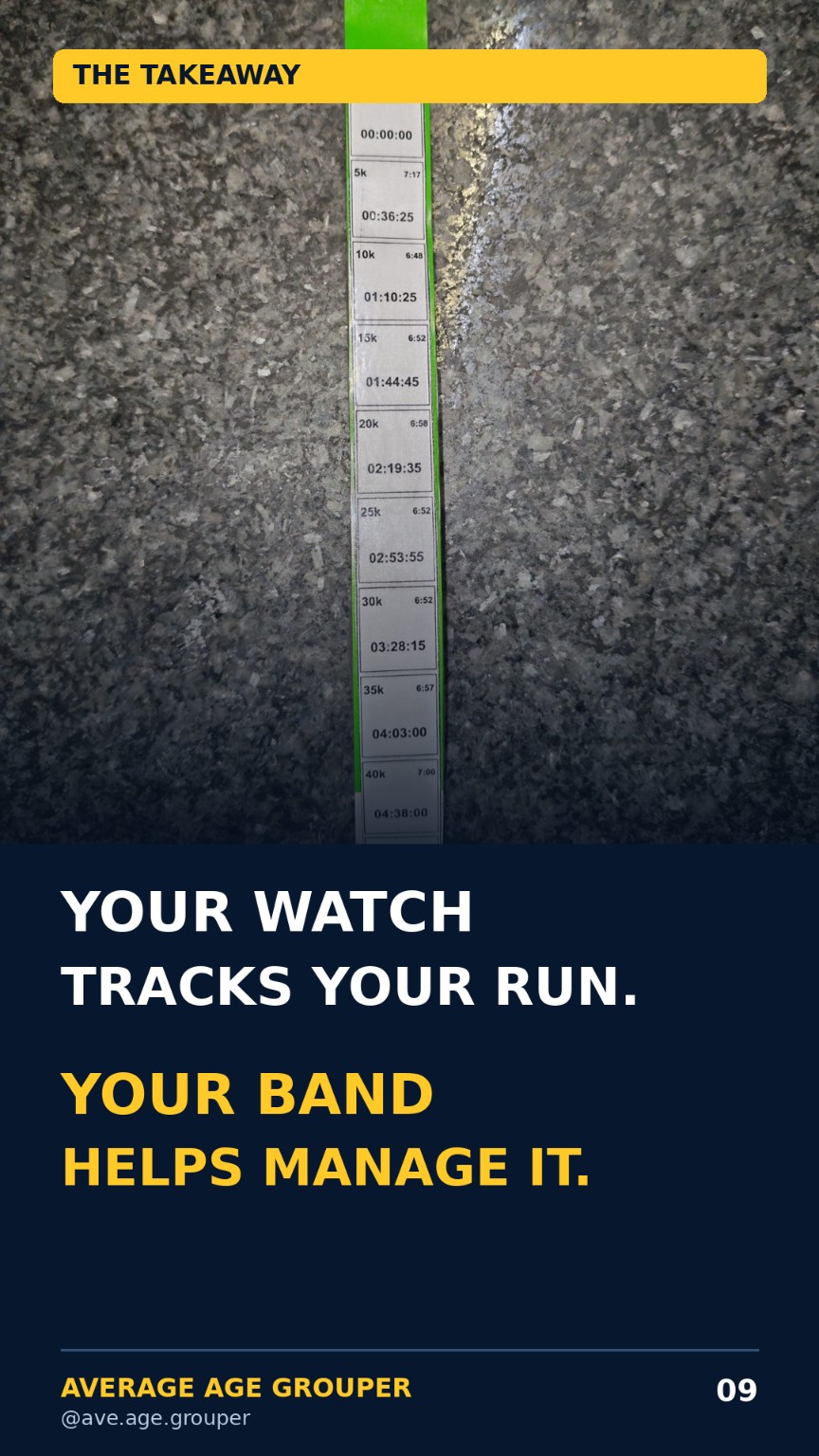
Our homemade pacing bands were the practical centre of the plan. We made two versions—kilometres completed and kilometres remaining—with elevation-adjusted checkpoints every 5 km and a target finish of 4:54:30. The idea was to check the official course markers rather than react to every GPS kilometre, use any early cushion to walk briefly, fuel, regroup and keep moving.
The bands were inspired by Coach Parry, whose professional pacing bands remain our first choice whenever one is available. This was simply our DIY alternative for a race without one.
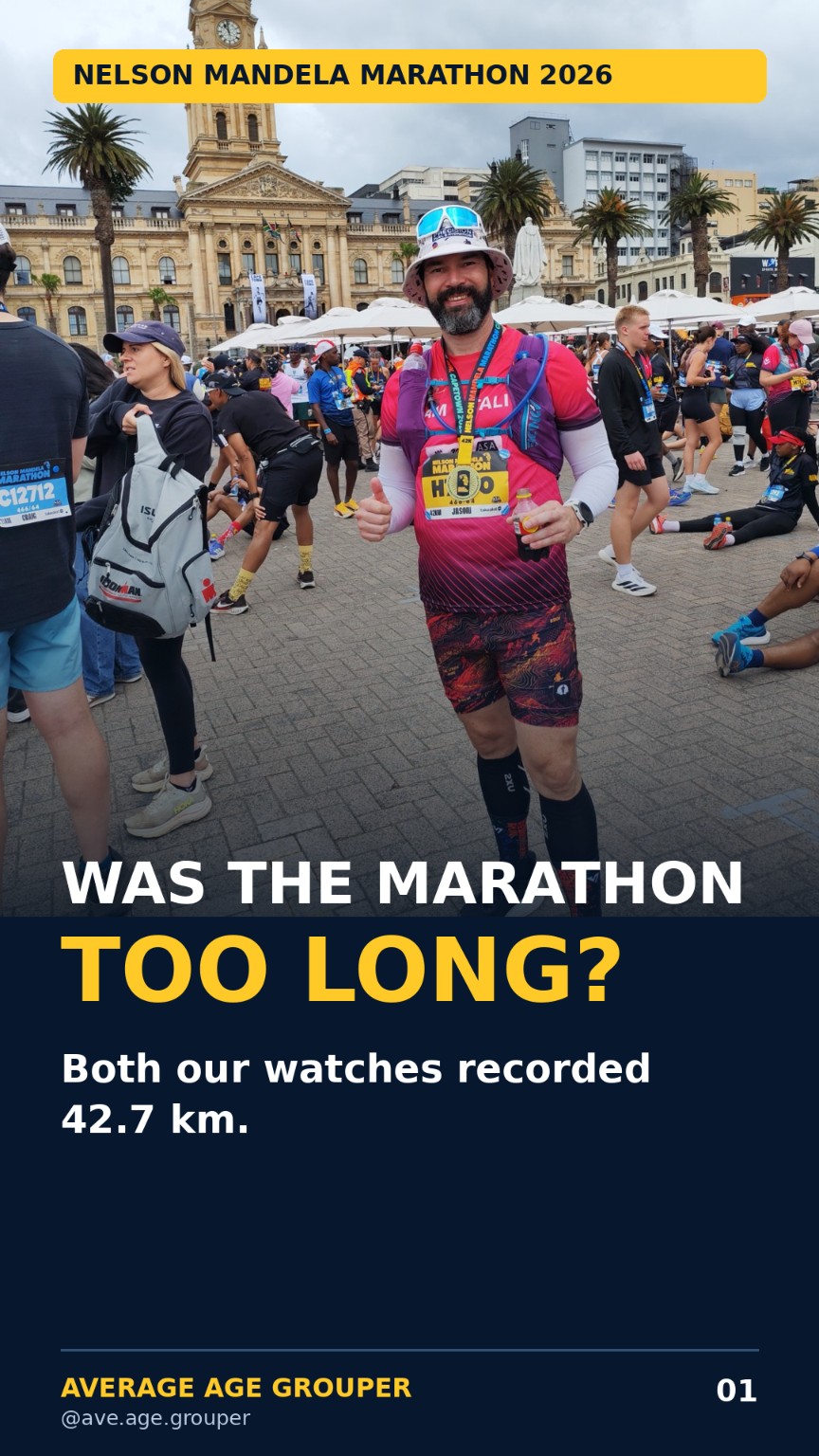
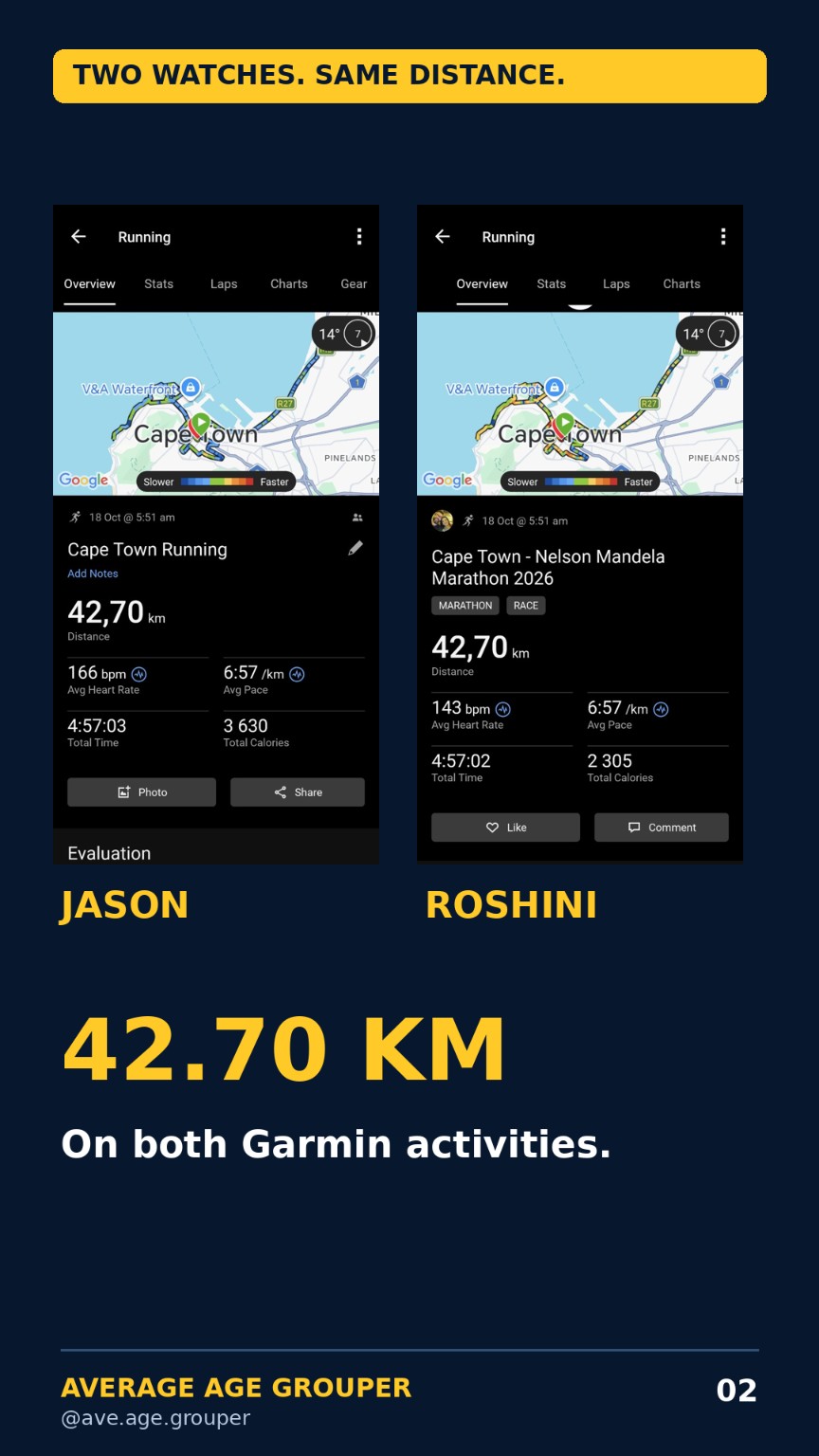
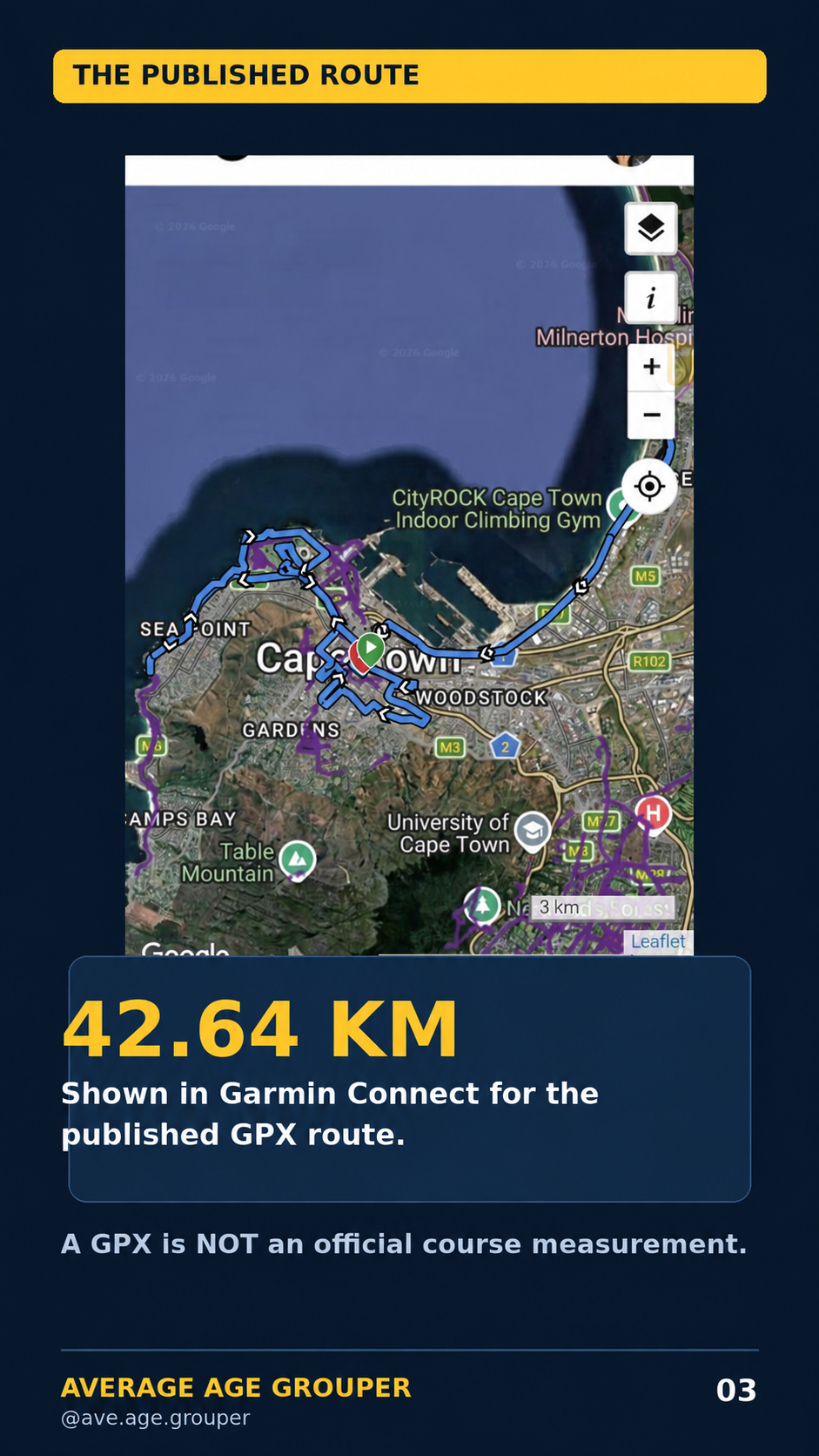
Both Garmin activities eventually recorded exactly 42.70 km. The event's published GPX displayed as approximately 42.64 km in Garmin Connect. That is certainly interesting, but it is not proof that the certified course itself was long: a GPX is not an official course measurement and watches can add distance through GPS error and the line actually run.
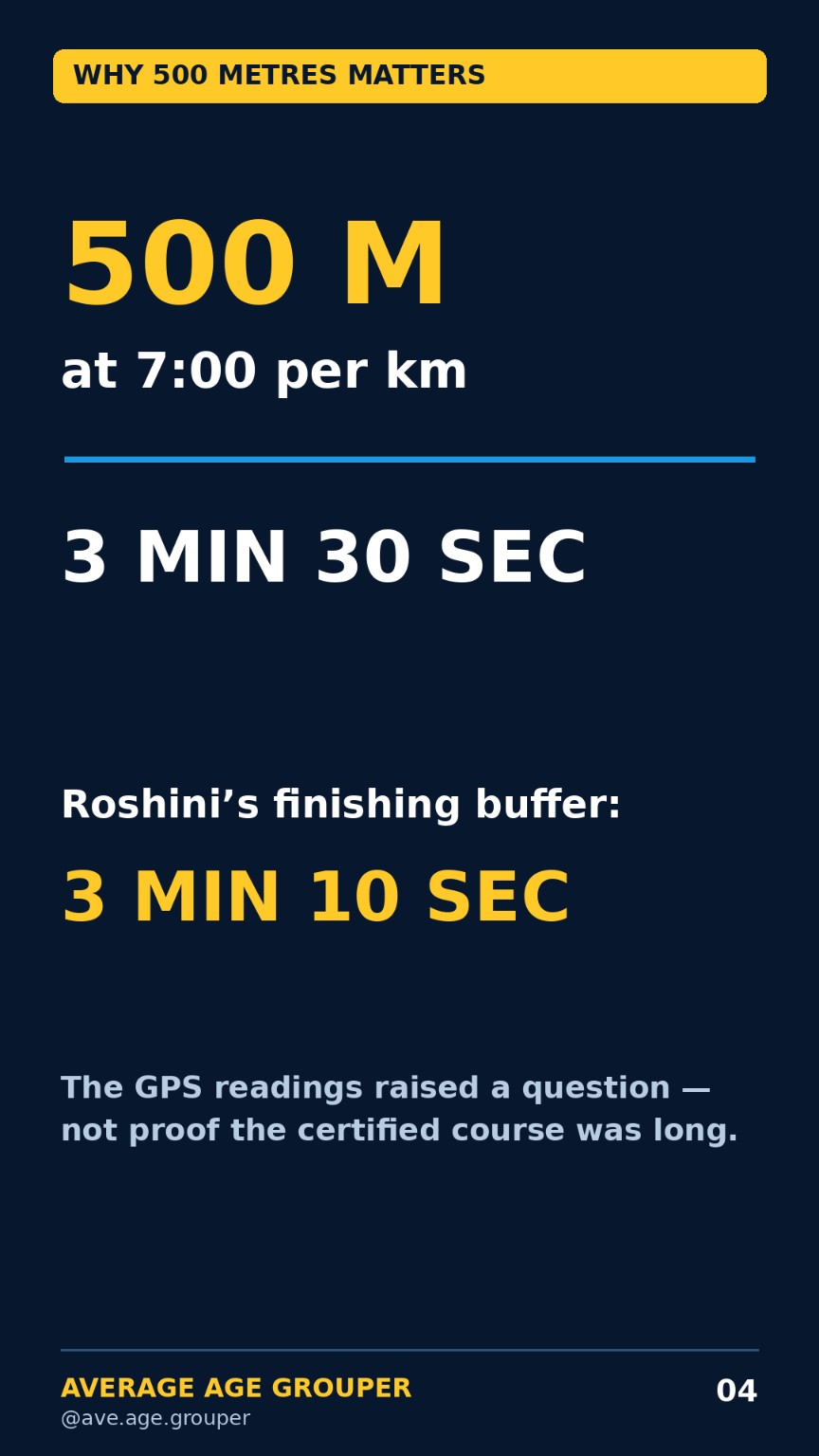
It still mattered to our day. At roughly 7:00 per kilometre, an additional 500 metres takes about 3 minutes 30 seconds. Roshini's final sub-five buffer was 3 minutes 10 seconds. The watch may track your run, but the pacing band helps manage it—and the official timing mat gets the final word.
Expo and registration: exactly how it should work
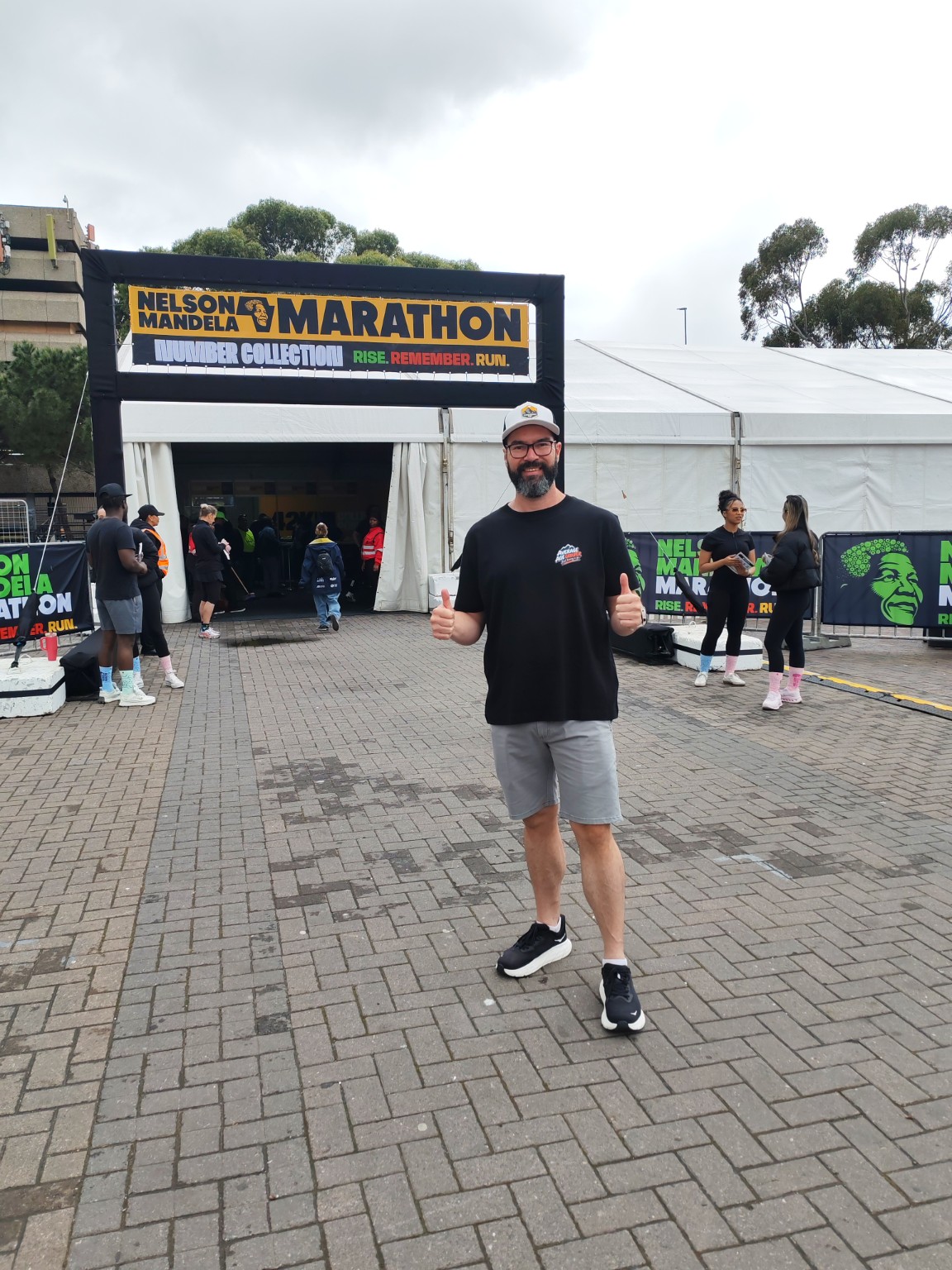
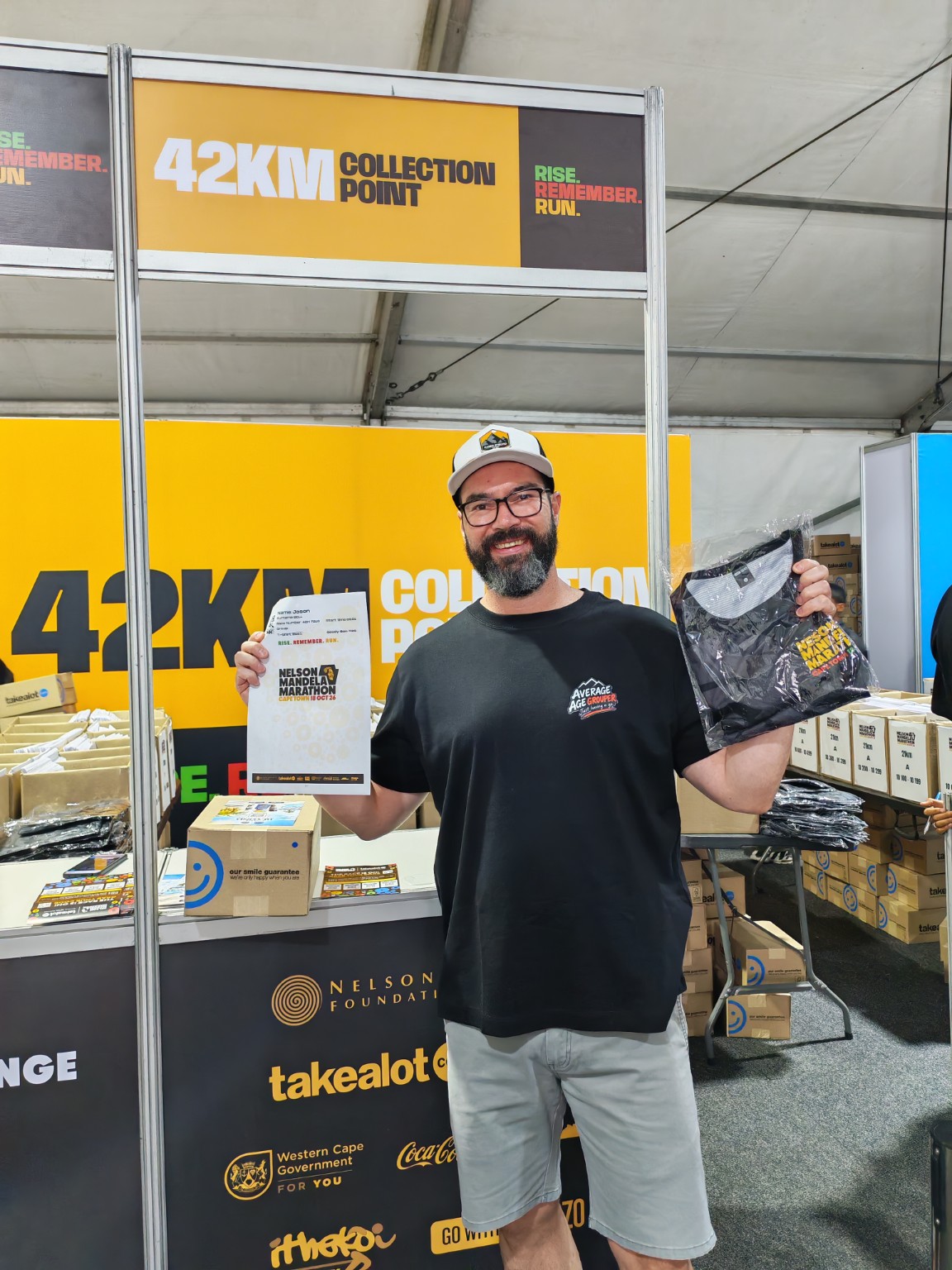
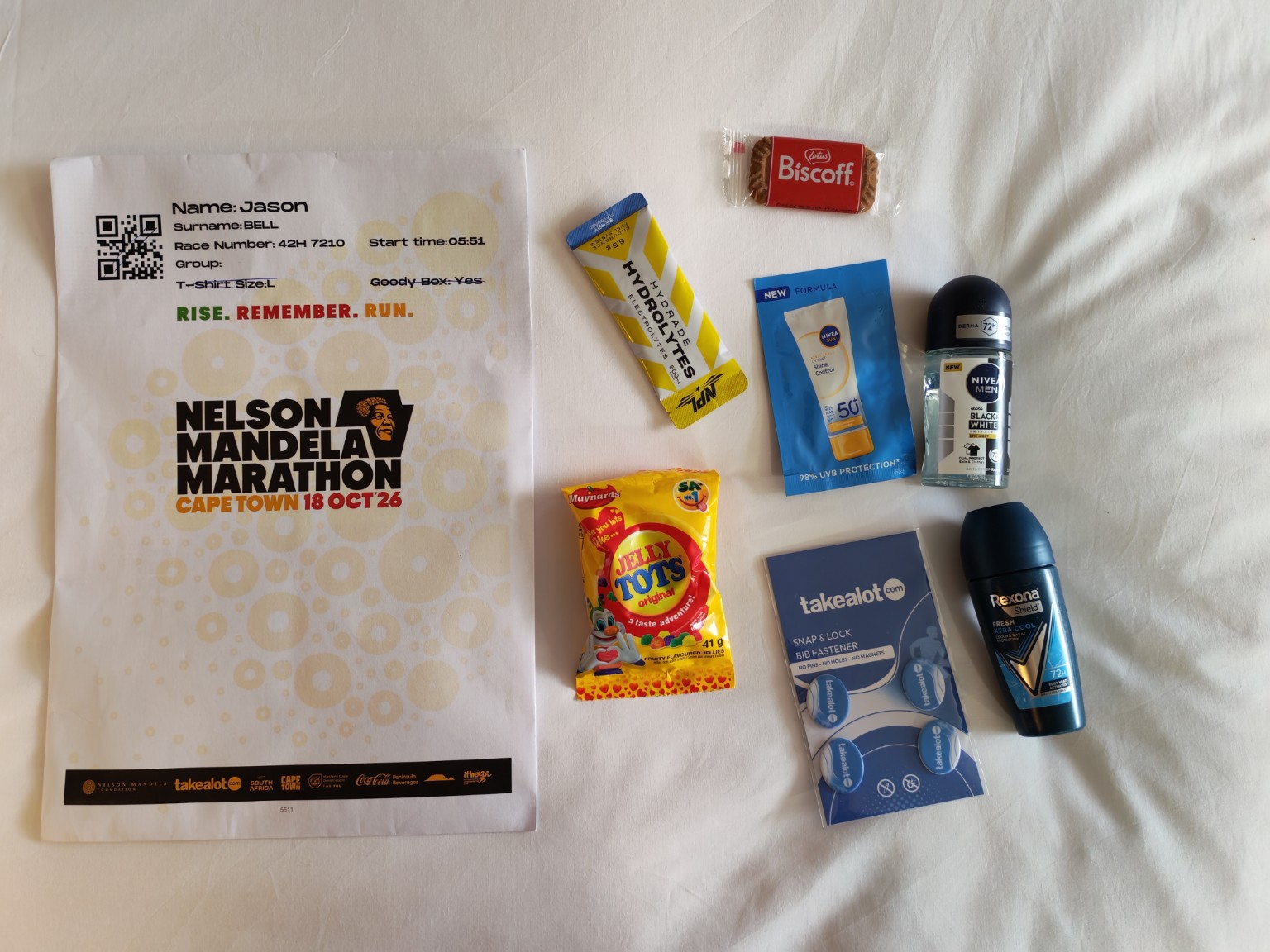
The expo and race-number collection were exceptionally well organised. Entry was easy, the layout made sense and there were plenty of helpful staff keeping people moving through each stage. It felt professional and efficient—two words that become increasingly valuable when you are trying to save your legs rather than tour a registration hall for the afternoon.
Outside, preparations appeared to be under way for a substantial post-race hospitality and entertainment area. There was Corona Cero branding, food trucks and space for food and drinks. Around the Grand Parade there also seemed to be plenty of toilets, which is not glamorous race content but is absolutely the kind of detail runners remember.
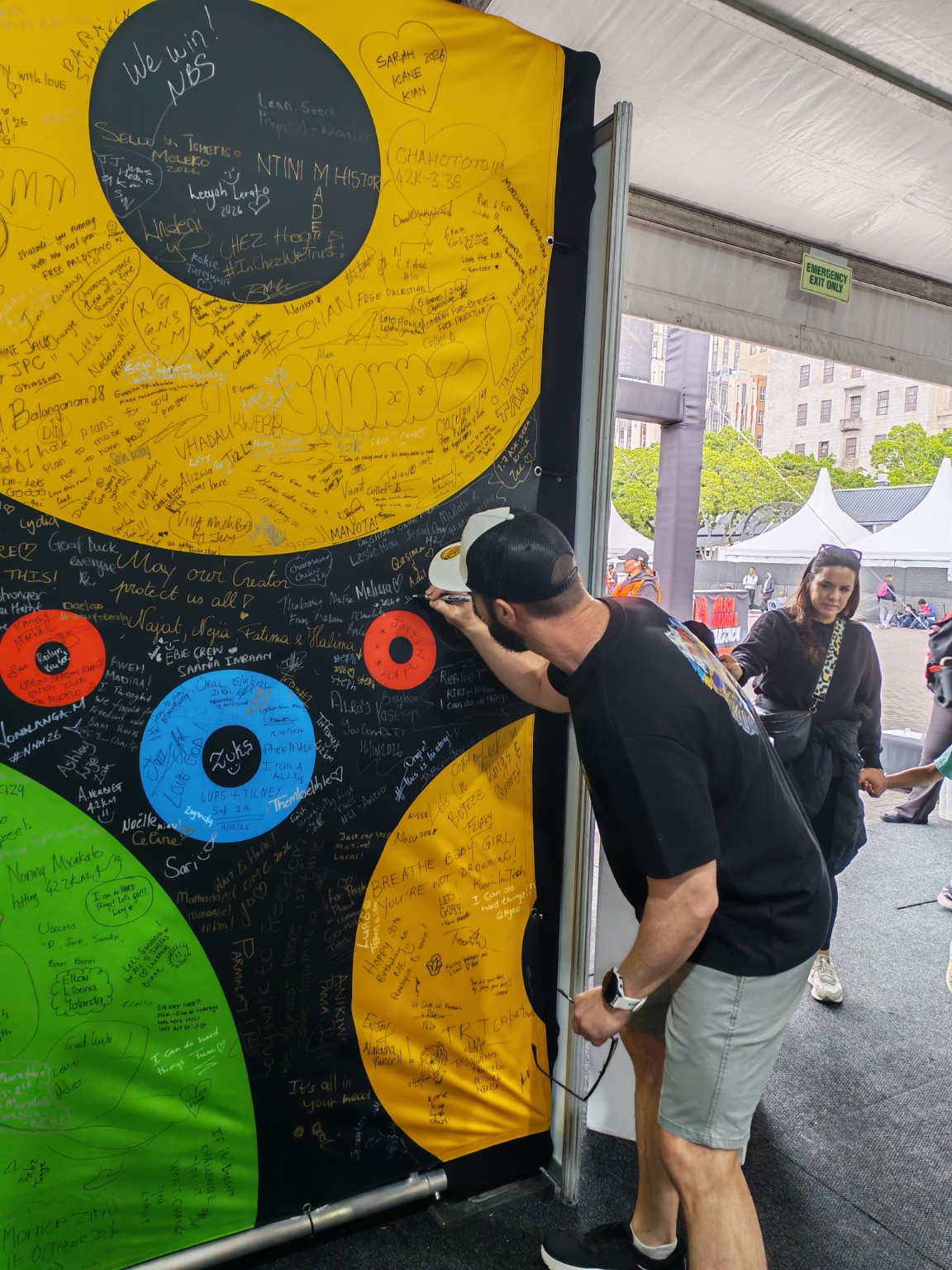
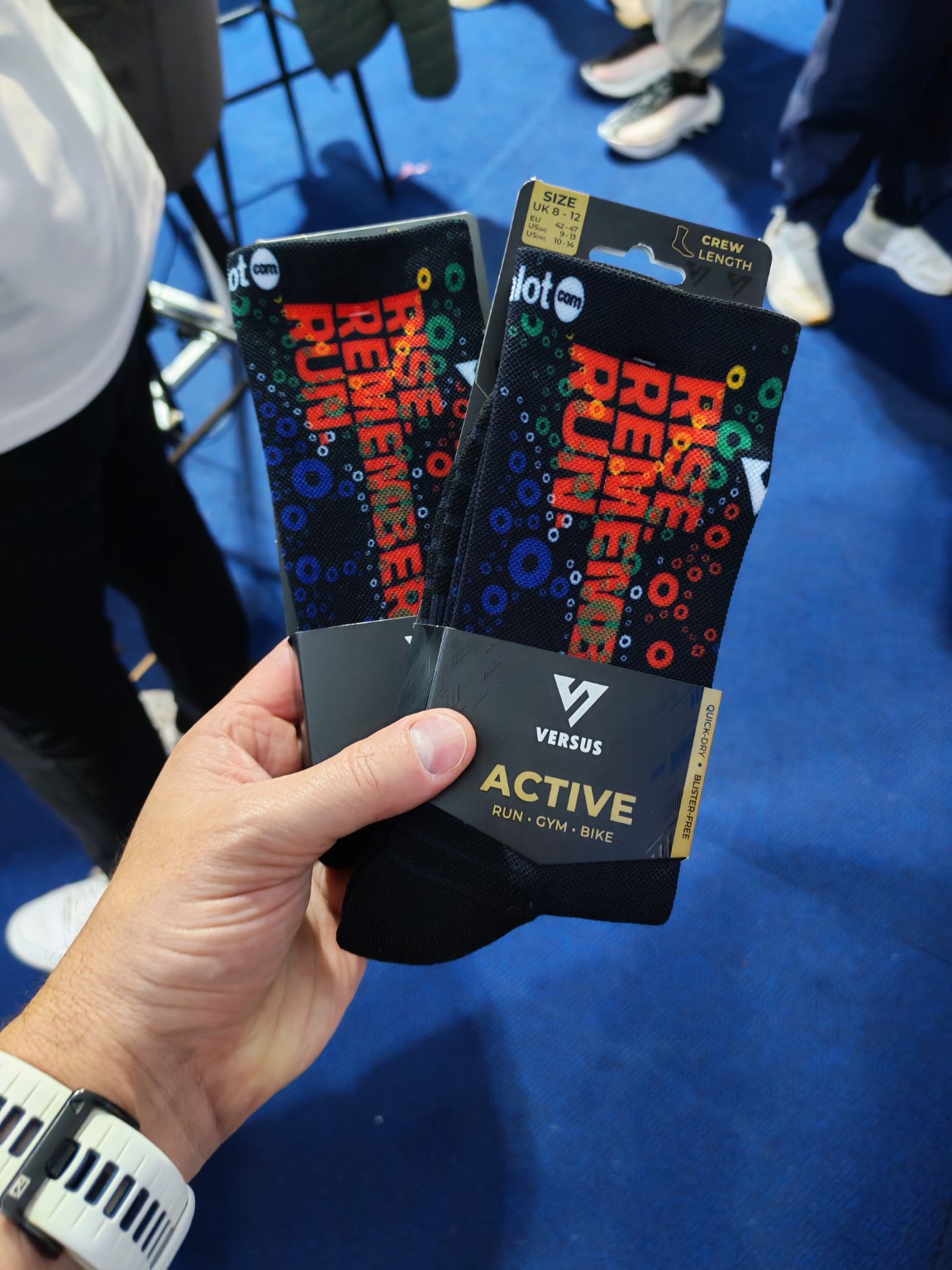
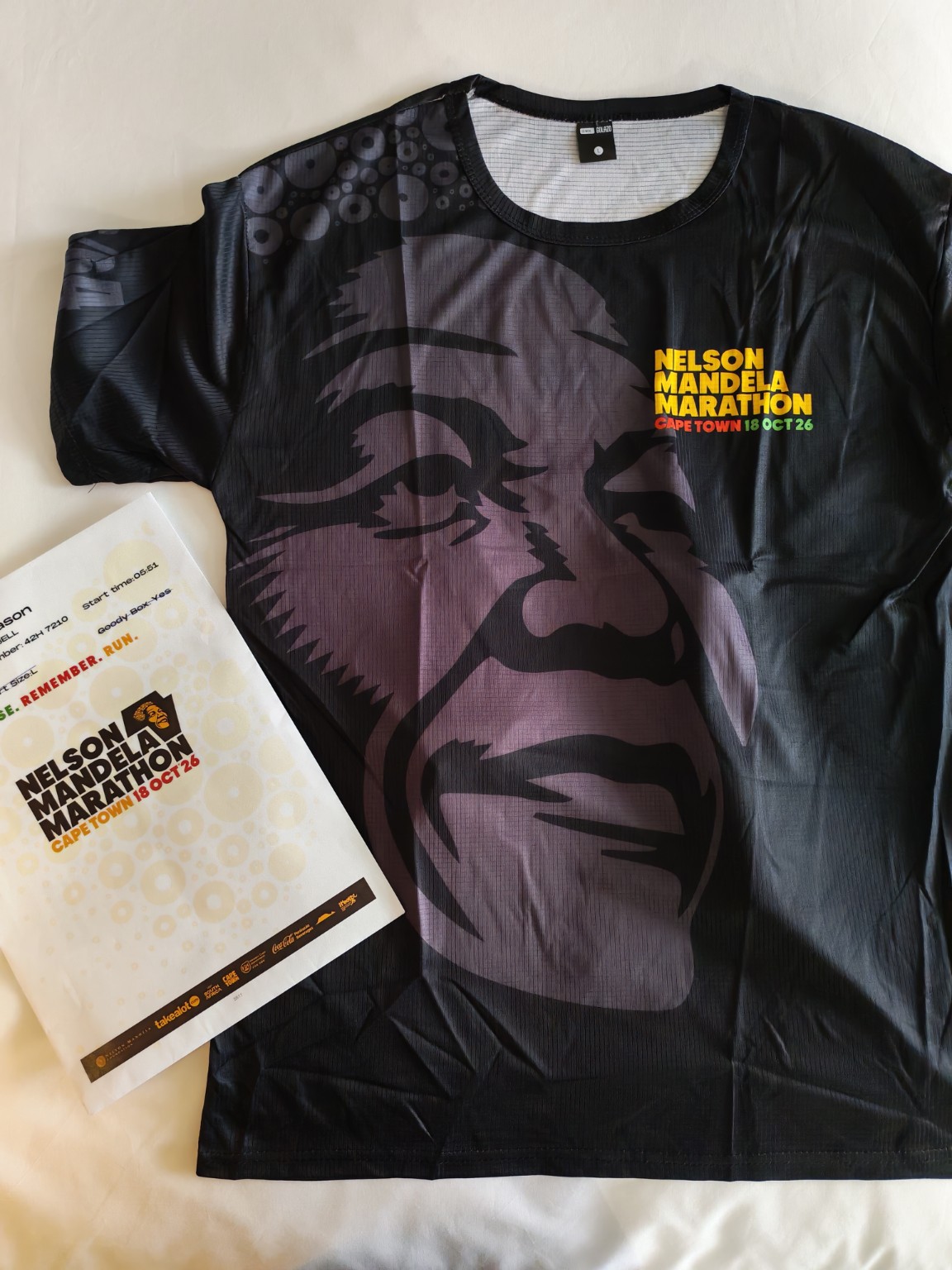
The collection itself came with a distinctive Nelson Mandela race shirt and a modest but useful goody bag. There were hydration tablets, jelly sweets, sunscreen and deodorant samples, a biscuit and Takealot bib fasteners. Event socks were also available, while a large message wall gave runners somewhere to leave a few words before race day.
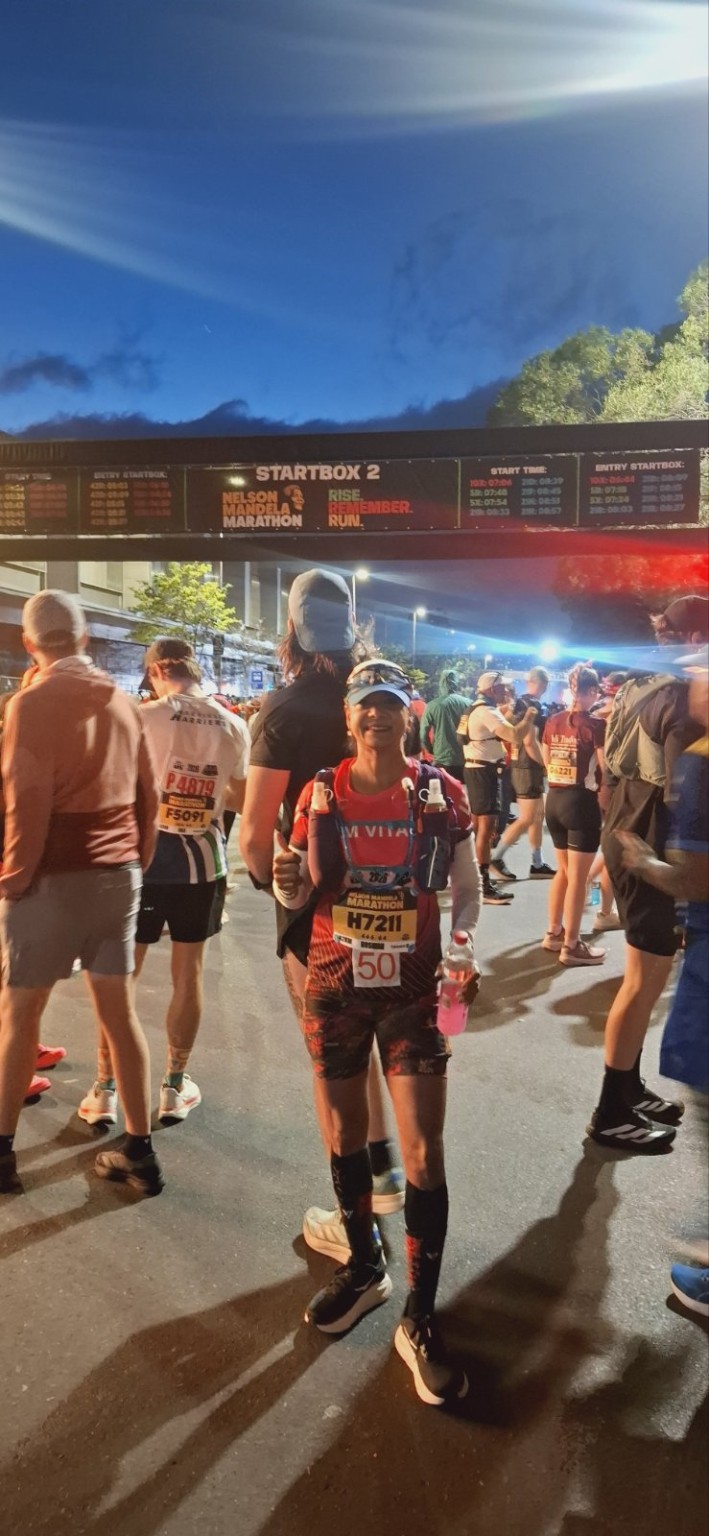
An unusually well-organised start
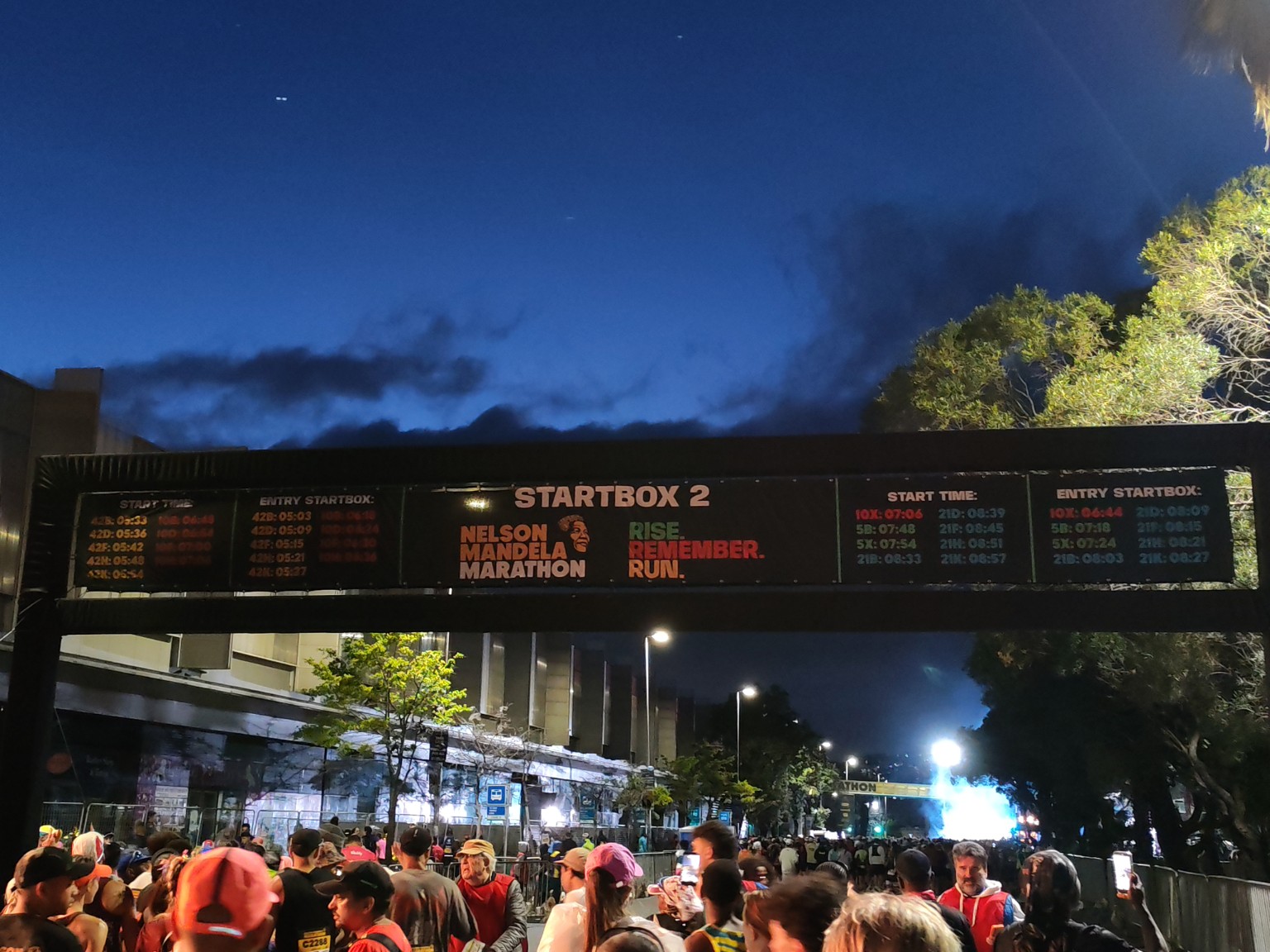
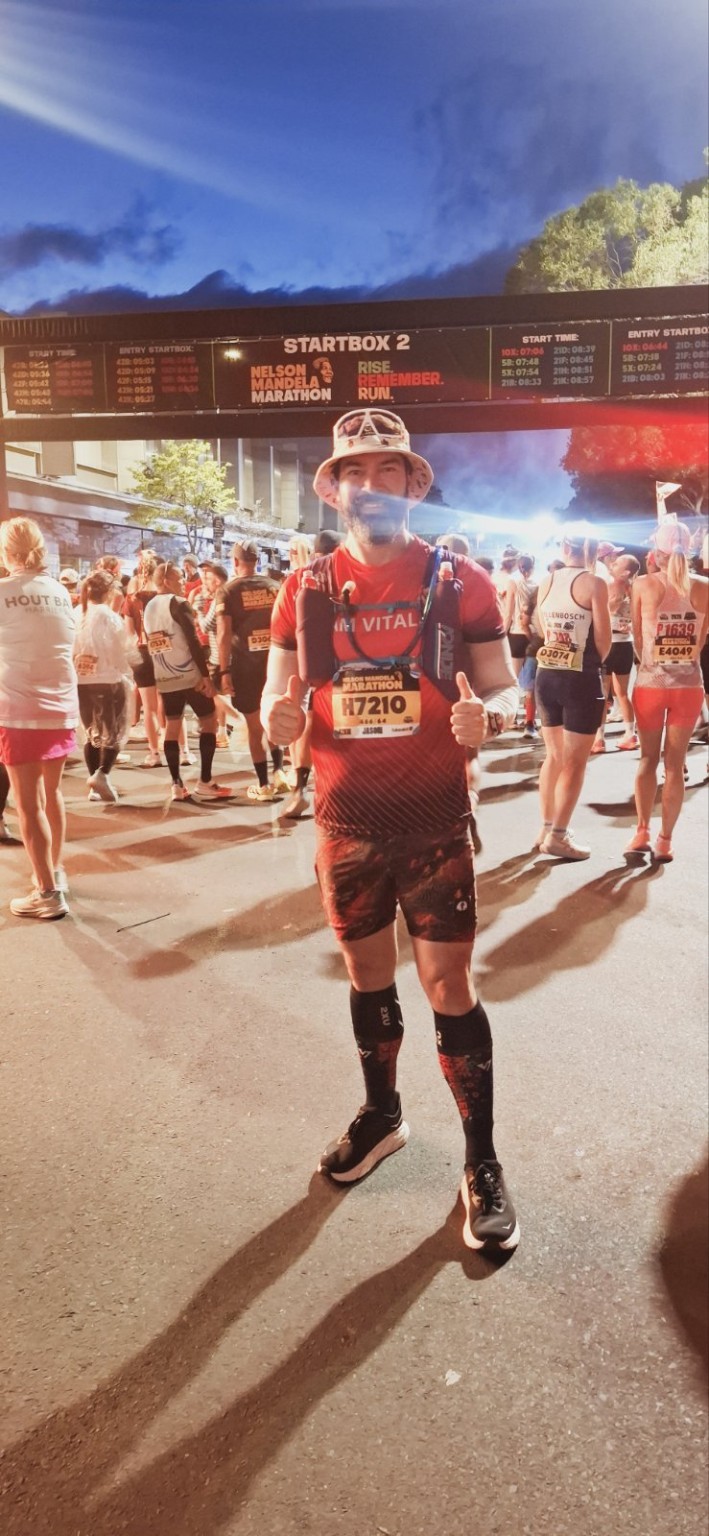
The start area was one of the event's strongest features. Large batches were used to manage the field and feed runners onto the course in a controlled way. There also appeared to be toilets inside the individual batches—an inspired bit of practical thinking before a marathon, when leaving your pen can become its own endurance event.
Even with a large number of runners, the system felt designed rather than improvised. Each batch also received its own short pyrotechnic send-off—not fireworks exploding overhead, but spark-like effects that made every release onto the course feel like an occasion. It set a confident tone for an inaugural race and showed that the organisers had thought seriously about both the pressure points and the atmosphere.
The early 10 km merger
The main area for improvement came early in the marathon, when the 10 km field joined our route. A considerable number of the 10 km participants were walking and people were naturally spread across the width of the road. That made it difficult for marathon runners to hold their line, rhythm and pace.
To be clear, this is not a criticism of the 10 km participants. They were there to enjoy their own event, at their own pace, and had every right to use the course in front of them. The issue was the way two very different streams of runners were brought together.
The shared section seemed to last roughly 500 metres to one kilometre before the routes separated again. Because the split came fairly quickly, separate lanes—or an earlier division—may have allowed everyone to have a better experience without requiring a major course redesign.
The elevation profile: fast and mostly flat
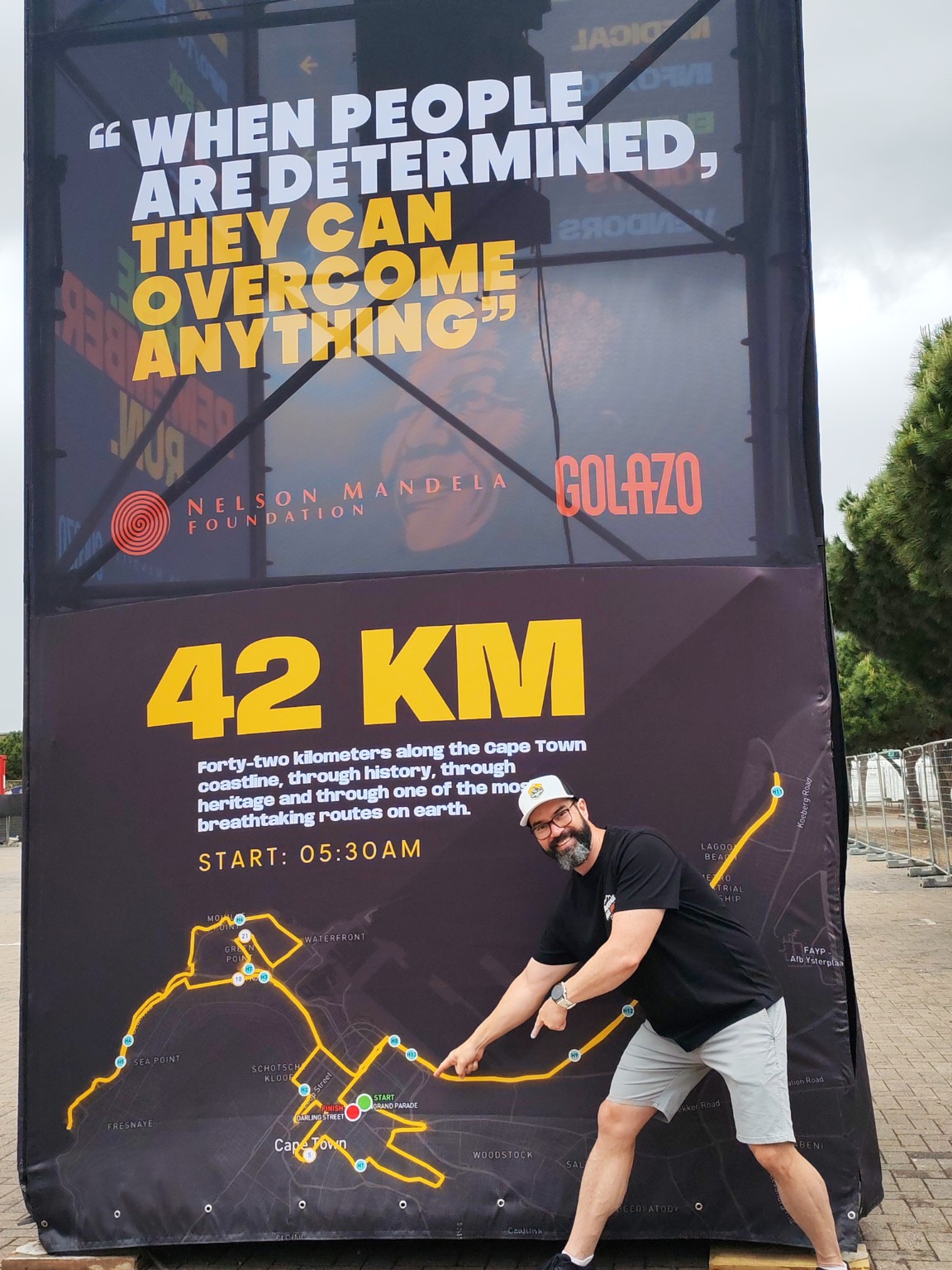
The organisers described the marathon as a fast, flat route, with the official course graphic listing 252 metres of total elevation gain. The full marathon also avoided the notorious Koesister Hill used by the shorter Slave Route Challenge events, so there was no single major climb waiting to ambush us.
That does not mean the course was completely flat. The elevation came through smaller rises and descents spread across the city route rather than one defining hill. This was exactly why our pacing bands used elevation-adjusted five-kilometre targets: stay controlled on the gentle climbs, allow the quicker sections to come naturally and judge the race by the course markers rather than one GPS kilometre at a time.
Hydration and nutrition
Overall, the water stations were well positioned and adequately stocked. Water was readily available, Coca-Cola was offered and I saw Powerade at some stations. I cannot confirm that every table carried the same selection, so it would be unfair to suggest they did.
Drinks were served in cups rather than bottles or sachets. At a Pick n Pay-branded station I also noticed food being handed out, including sweets and fruit. There may have been food elsewhere, but this was the station where it stood out to me.
The useful summary is simple: hydration support was good, supplies were available when we needed them and there were no significant complaints about the spacing of the tables.
The half-marathon merger worked better
The 21 km runners joined the marathon route very close to the finish, seemingly within the last 500 metres. In contrast with the earlier 10 km merger, this did not create a meaningful problem. The shared approach worked reasonably well and gave runners from both events enough space to keep moving toward the line.
That contrast is worth noting. Multiple distances can share part of a course successfully; the timing, width of the road and way runners are channelled make all the difference.
A finish designed for tired legs
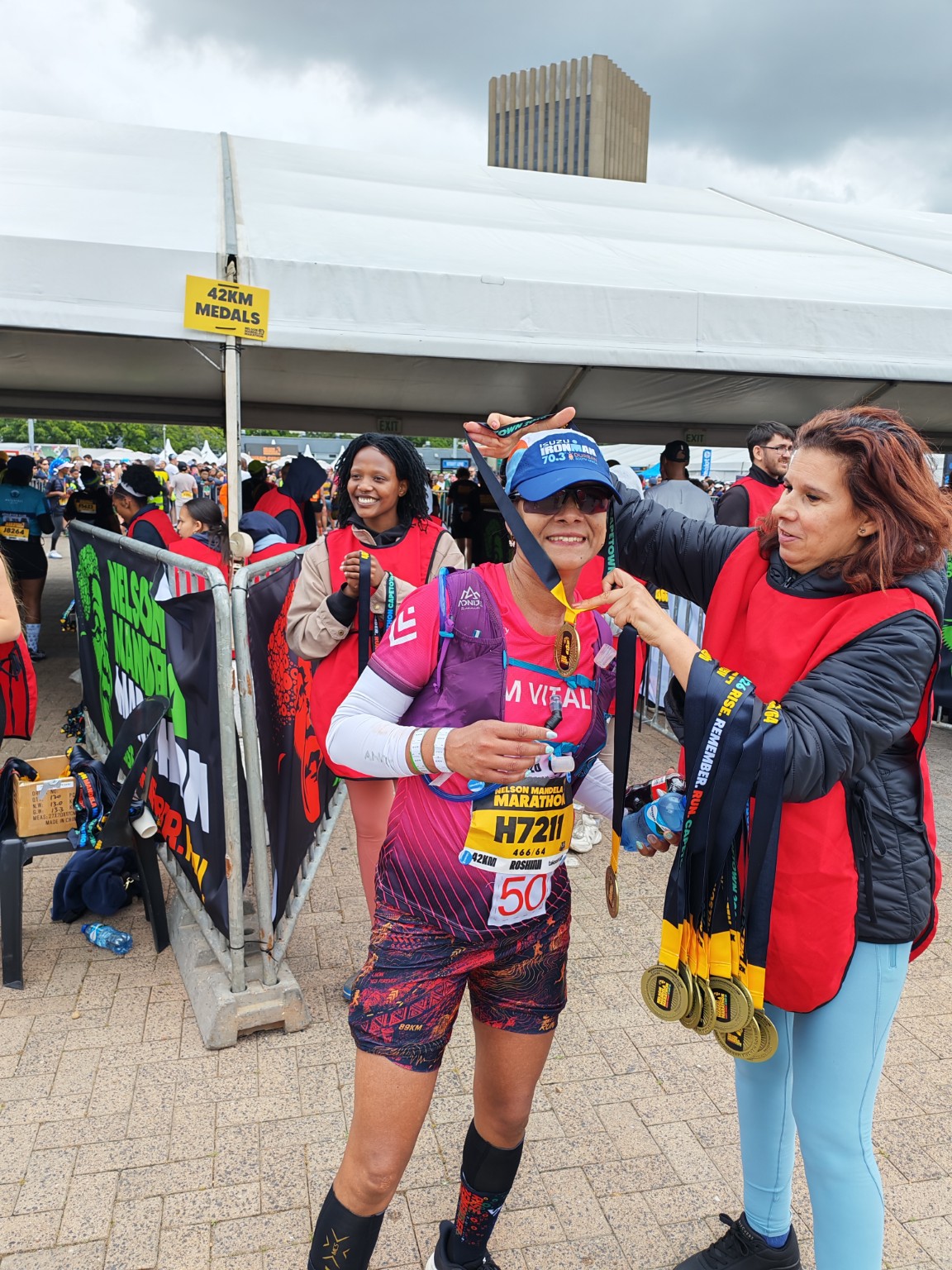
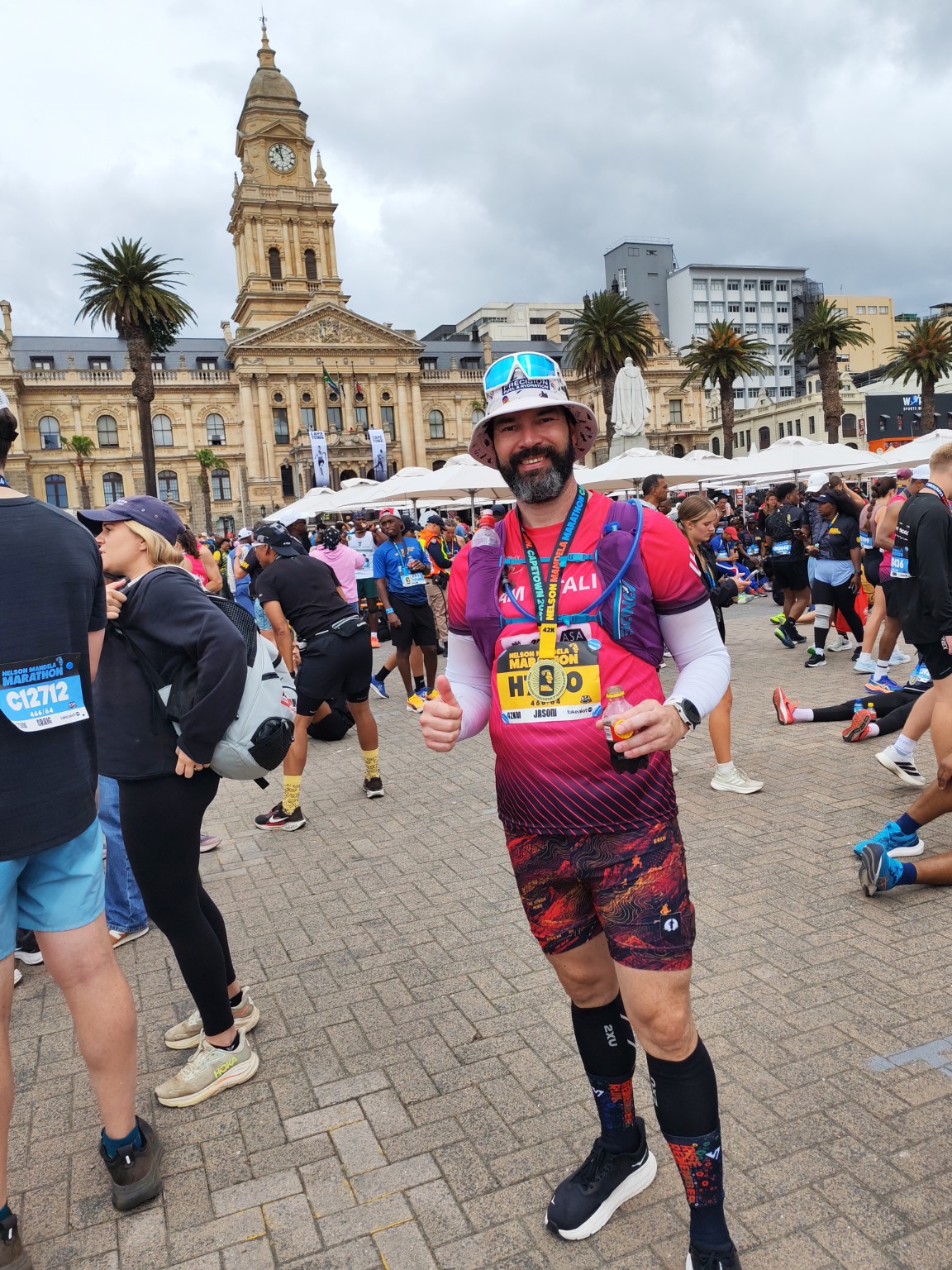
The finish area was spacious, open and easy to move through. Finishers received their medals and a cool drink, and there was no obvious congestion or confusion after the line.
After 42.2 km, efficiency is a luxury. Nobody wants to complete a marathon and then discover an unexpected obstacle course between the timing mat and somewhere to sit down. Here, the flow was simple—and greatly appreciated.
Still waiting for the official race photos
One small post-race disappointment is that, at the time of writing three days later, the official race photographs still have not appeared. For an event that felt so polished in most other areas, it would have been nice to relive a few more moments from the route while the race was still fresh.
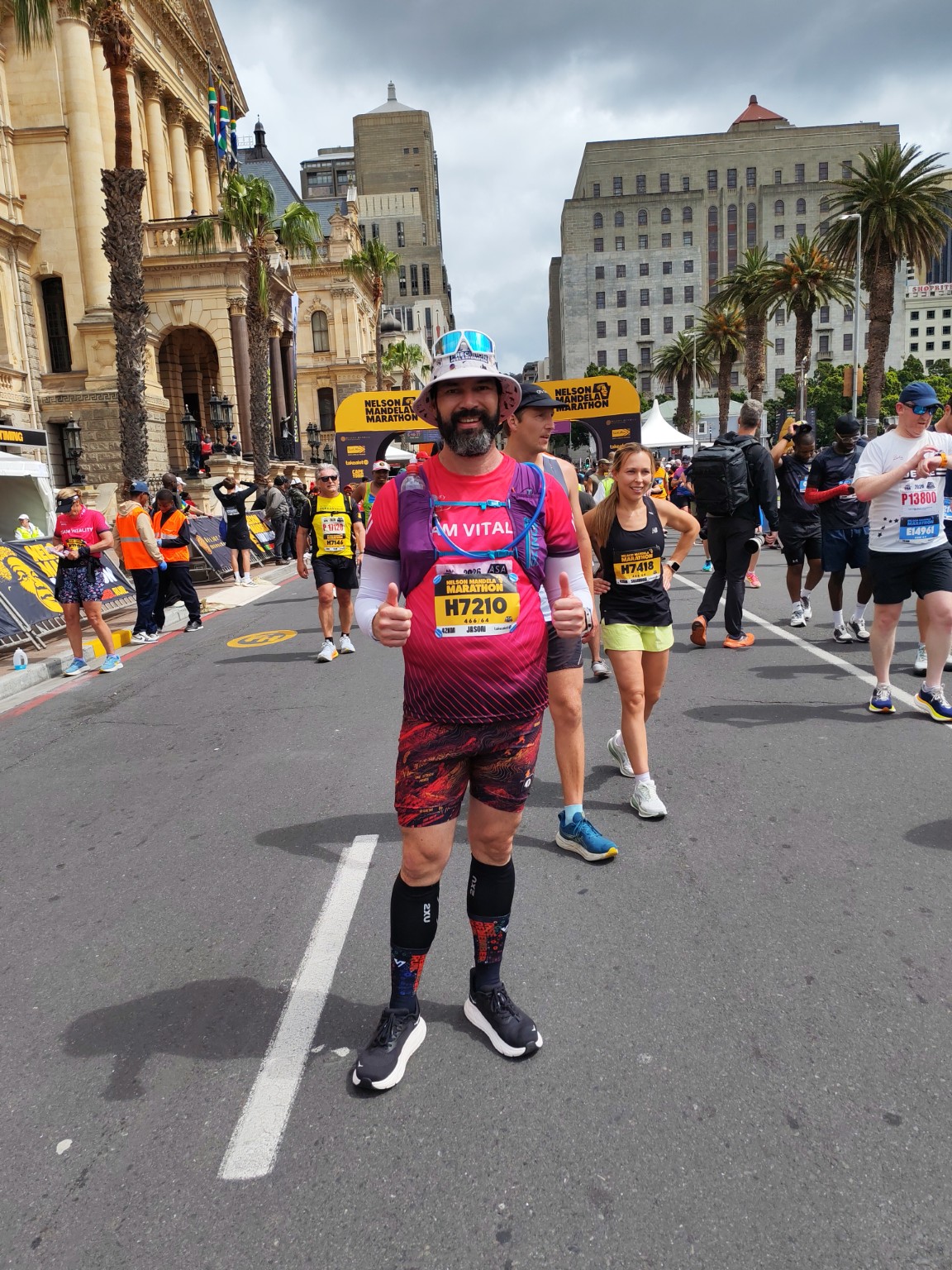
We do at least have our own start, course and finish photographs—including proof that I was genuinely moving at one point. If the official images become available later, I will add the best of them to this review.
Final verdict
For an inaugural event, the Nelson Mandela Marathon was impressively assured. Registration and number collection were excellent, the start-line batching and toilet provision stood out, hydration support did its job and the finish operation was calm and efficient.
The short merger with the 10 km field was the clearest opportunity to improve. A divided lane or earlier separation would help marathon runners maintain pace while letting the 10 km participants enjoy their event without feeling as though faster runners were trying to thread through them.
Average Age Grouper verdict: the organisational foundations are very strong, the sub-five mission was successful and this was an impressive debut. Fix the short 10 km merger and get the official photographs out a little sooner, and the event will have addressed the two clearest frustrations from an otherwise very well-run day.