The short version
If you enter a 10K at Kyalami expecting a fast, flat personal-best course, you may want to adjust your expectations before the lights go out.
The circuit is surprisingly hilly, the field was crowded and the sun was absolutely baking. But that is only half the story. The atmosphere was excellent, the music was pumping and we had the unusual privilege of spending a morning inside the garages and running on the actual Grand Prix track.
This was not really a race for chasing a time. It was a day out, a bucket-list experience and a chance to do something runners do not get to do very often.
We came to have fun
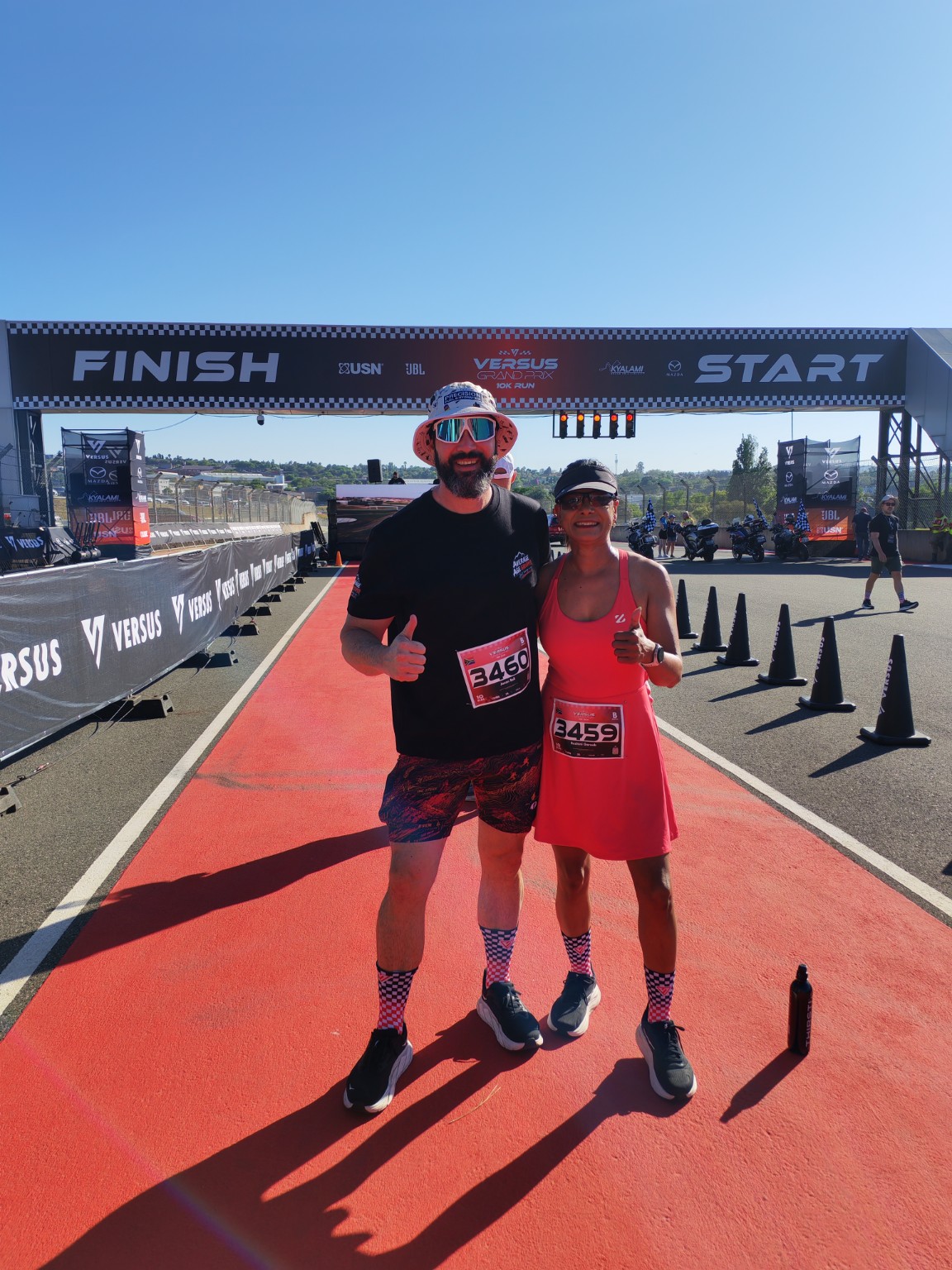
Roshini and I ran the whole event together. There was no pacing band, no qualification target and no anxious checking of the watch. We deliberately took our time, enjoyed the circuit and treated it as a fun morning out.
That turned out to be exactly the right approach. There were too many people around us to settle into a consistent rhythm, and the route had far more climbing than many people would expect from a motor-racing circuit. Kyalami is not a smooth oval: it rolls constantly, with very little genuinely flat running.
The route consisted of two laps of the circuit, followed by a short out-and-back of roughly 500 metres to reach the finish. It was a simple enough layout, but by the second lap the heat and those repeated rises made themselves very well known.
Arrival was easy; the start was late
We arrived at about 6:45 am and had no difficulty entering or parking. Somebody had collected our race packs for us, so I cannot fairly review the collection process itself.
The race eventually started approximately 25 minutes late. My understanding on the day was that some participants were delayed getting into the venue and the start was held to give them time to arrive. I do not see that as an organisational failure in itself; allowing more runners to make the start was a reasonable decision.
The unfortunate consequence was that everyone began later as the temperature continued to rise. On a cooler morning, 25 minutes may have been a minor inconvenience. Under that sun, it mattered considerably more.
Big atmosphere, very little flat road
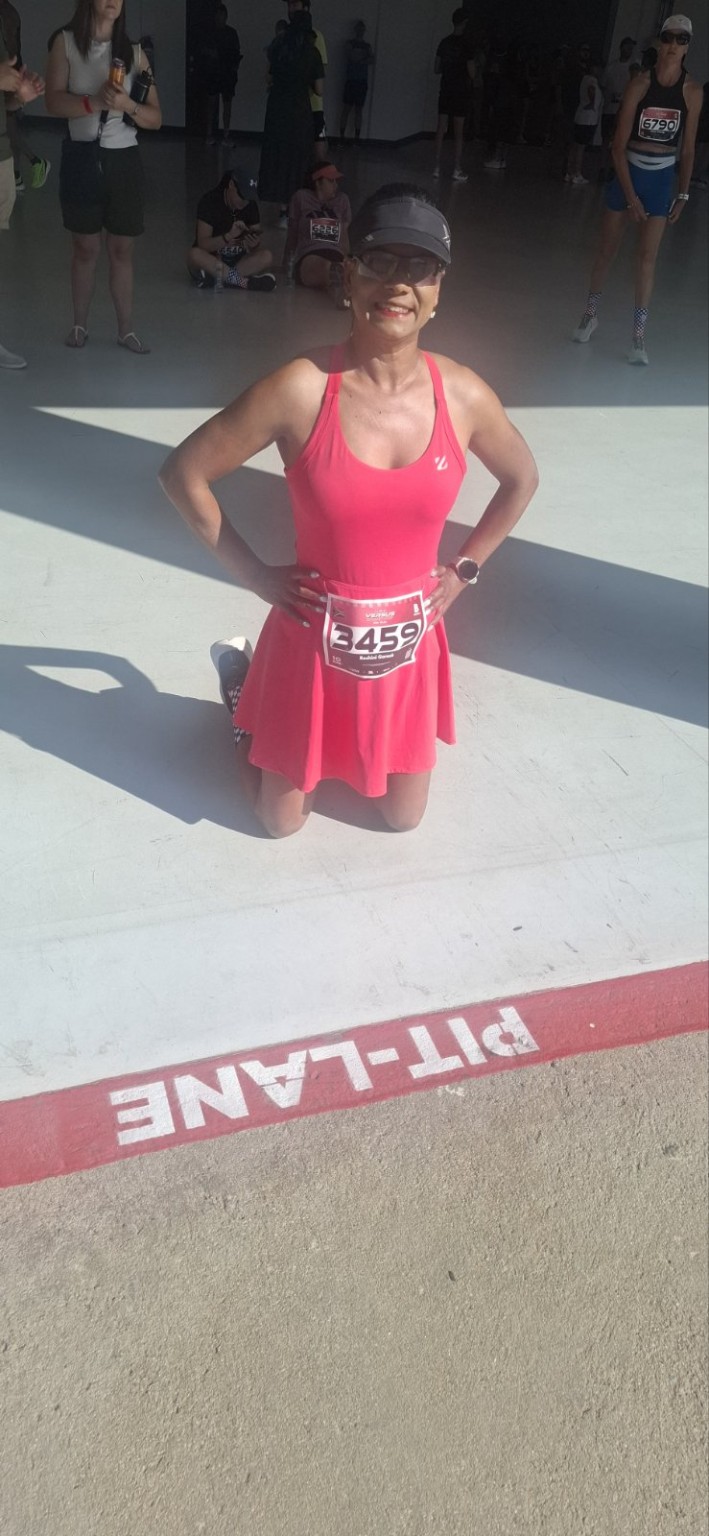
The atmosphere was one of the strongest parts of the event. There was music, entertainment and a real sense that this was something different from a normal Sunday 10K. Being able to walk through the garages and then head out onto the famous circuit gave the morning a proper sense of occasion.
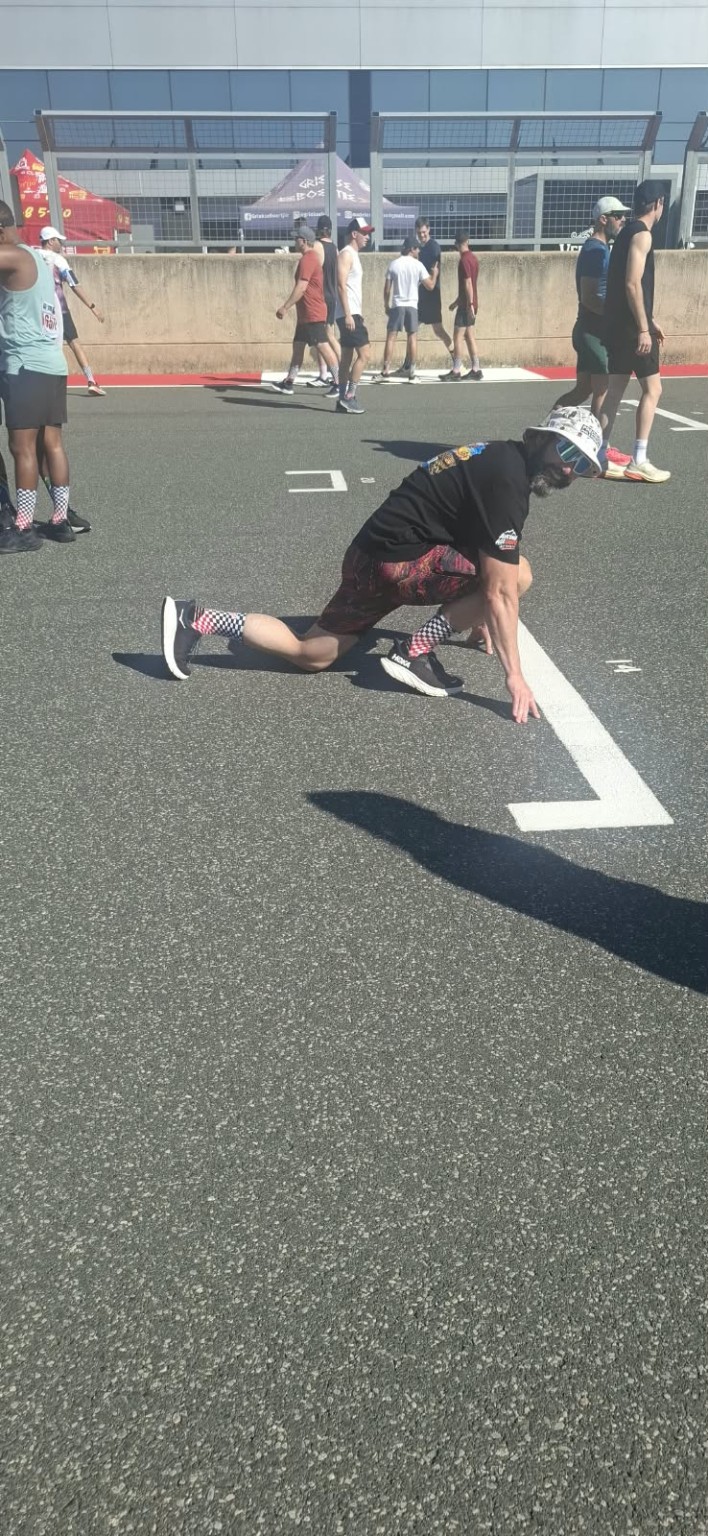
It is also a good event for runners who are more interested in the experience than the stopwatch. You do not need to be a petrolhead or a serious racer to enjoy the novelty of standing on the grid and running beneath the Kyalami gantry.
Just leave the PB ambitions at home. Between the crowds, the rolling course and the heat, this was much better suited to photographs and high-fives than perfectly even kilometre splits.
Hydration: the biggest practical weakness
There were two water stations, roughly around 2.5 km and 7 to 7.5 km. On an extremely hot day, that left a long gap through the middle of the race. An additional station near 5 km would have made a significant difference.
The existing stations were also congested. Plenty of runners wanted to stop, drink and cool down at the same time, which made it difficult to move through smoothly. The hydration was there, but the spacing and crowd flow did not quite match the conditions or the size of the field.
A cramped finish, but excellent extras
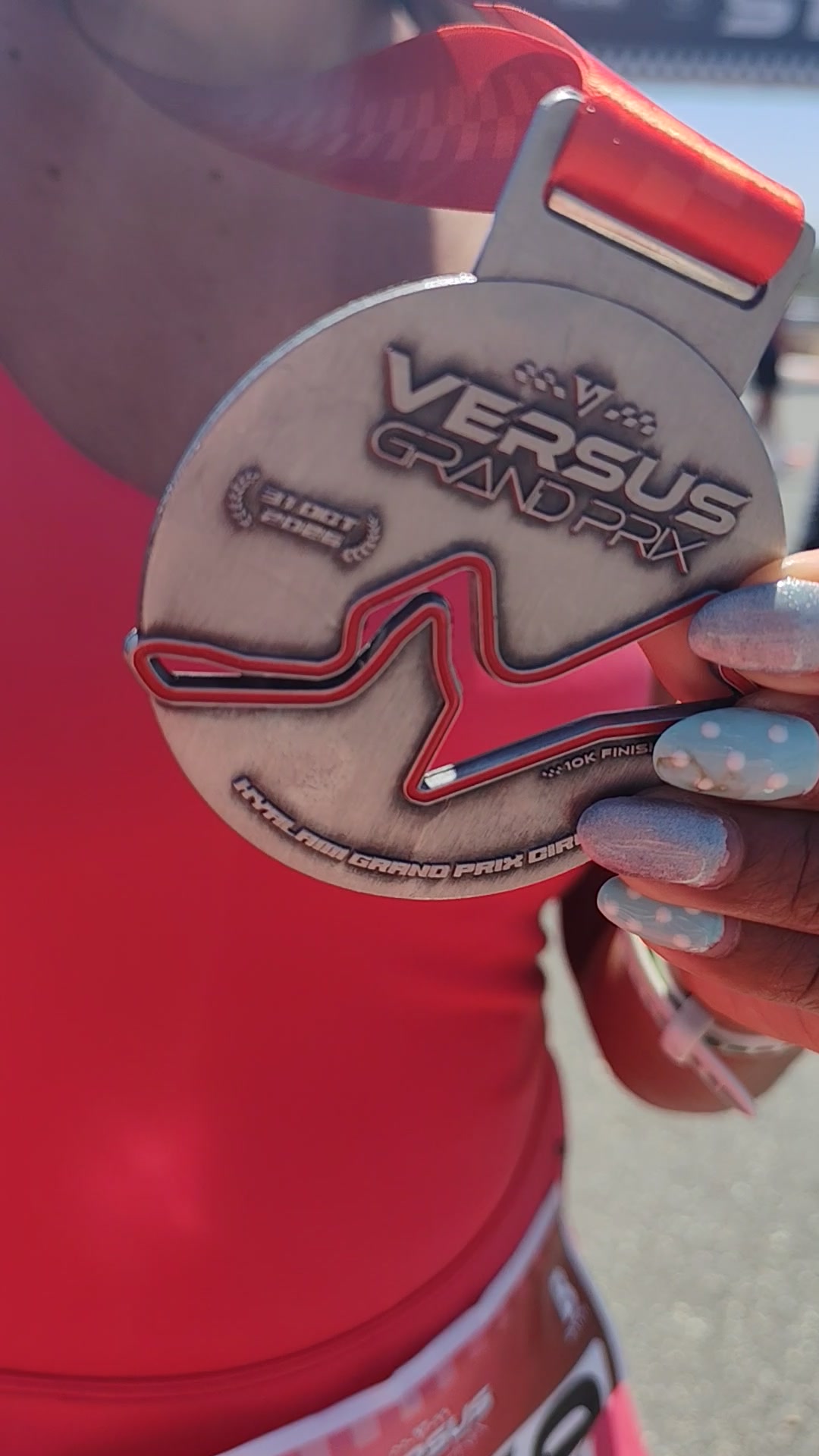
The finish area became crowded while runners tried to collect medals, shakes and electrolytes. It was a little cramped and difficult to move through immediately after crossing the line.
Credit where it is due, though: the post-race extras were impressive. The special Versus socks were a great touch, and there were USN hydration and protein products, Super M drinks and food vendors. Those are thoughtful additions and helped the event feel like more than a quick run around the track.
The traffic strategy we invented after the finish
Leaving the venue was the only time we personally encountered a traffic problem. Rather than sit in the queue, we parked again, walked back to the food vendors and extended the day a little.
About 45 minutes later, we tried again and the traffic was virtually gone. Sometimes the smartest race-day strategy happens after the finish line: eat first, drive later.
Credit for listening
Versus later acknowledged the feedback around the delayed start, the heat, hydration, crowd management and traffic. They apologised to those affected and said the lessons would guide improvements to future events.
That response deserves recognition. This was a new concept for the organisers and for South African running, and first editions almost always reveal pressure points that only become obvious when thousands of people arrive. Listening openly is a good starting point; the important part will be what changes next time.
Should it become a night race?
One suggestion I saw afterwards was to turn it into a night race. Now there is an idea.
Because Kyalami is a closed circuit, a night format seems more plausible than it would be on public roads, although lighting, safety and venue availability would still need to be worked through. Cooler temperatures, music pumping and the circuit atmosphere under the lights could make it something genuinely special.
Final verdict
The Versus Grand Prix 10K was a fantastic concept with plenty of thoughtful extras and a few clear first-event growing pains. The heat exposed the limitations of having only two water stations, while the crowded track and cramped finish made this the wrong event for anyone chasing a fast time.
But judging it only by the stopwatch would miss the point. You came to run around Kyalami, explore the garages, pose on the grid, enjoy the music and make a day of it. That is an opportunity that does not come around very often.
Average Age Grouper verdict: absolutely worth doing once for the bucket-list experience. Would I rush back for exactly the same race? Probably not. But a Kyalami night race? Now you have my attention.
Just having a go!